

Obsessive-Compulsive Disorder: Assessment, Diagnosis and Treatment Issues
A man on an inpatient unit tells you the intrusive thought he has told one other person in his life. Outside of his brother, you are the only one who knows. If your face moves while he says it, McGrath’s point is that he does not come back, and he may wait another decade before telling anyone again. So the first skill in this work is not a technique. It is being able to hear it.
He is direct about why that matters here more than almost anywhere else. Public understanding of OCD stops at handwashing and straightened pencils, and the actual content is nothing like that. It is harm, contamination of others, blasphemy, sexual intrusions about children, doubt about one’s own orientation, responsibility for events that have not happened. He gives fair warning early that he will not soften the examples, on the grounds that a practitioner needs to know what this sounds like before they advertise themselves as treating it, and that finding out you cannot sit with it is better learnt now than in front of a client.
Six hours in three sessions. The first works through what OCD is and is not, diagnosis against the DSM-5 criteria, obsessions as thoughts and urges and images rather than thoughts alone, the problem with the term pure O, screening instruments, the full range of themes you will actually meet, and hoarding as its own presentation. He then moves to genetics, medication and the rationale for exposure and response prevention, and finishes on case after case of ERP applied to specific presentations. He says up front he is not interested in delivering hours of theory: the material is built around what he has done with people and why.
You’ll walk away with
- A clinical position on your own reaction, and why the client’s willingness to keep talking depends on it more than on anything you say back
- Diagnosis worked through the DSM-5 criteria step by step, including obsessions as urges and images and not only thoughts, which is where a lot of OCD gets missed
- What is actually wrong with the term pure O, and why mental compulsions take more detective work than visible ones
- Two screening instruments covered in practical detail, including a freely available self-report measure and a symptom checklist that doubles as a map of where OCD can turn up
- The assessment questions that matter: time consumed, interference, distress, and how much resistance the client has left, which together tell you what you are treating
- A working catalogue of themes, from contamination and harm through scrupulosity, sexual intrusions, symmetry, just right, superstition, numbers, checking and reassurance
- Reassurance seeking identified as the thing that quietly defeats exposure work, illustrated with a client whose ERP was going nowhere until he found out who she was phoning
- Hoarding treated separately, with the reasons people give for keeping things, a four-box method for working in the home, and practical advice about doing that work on site
- An exposure and response prevention rationale you can explain to a client, built on why arguing with the doubt cannot work, since there is always one more what if than you have answers
- Case examples throughout, including a young woman who had left university convinced she would push someone under a train, and what three hours on a station platform did that reassurance had not
Watch the course trailer
CPD Information For Mental Health Professionals
Enjoy complete flexibility with 100% self-paced learning you can access anytime, anywhere, and on any device. This course is included with your Tatra Training membership, along with every other course in the library.
Course Duration: 6 learning hours
Certificate and CPD hours: On completion you’ll receive a Certificate of Completion to support your CPD records. Your certificates are yours to keep.
Assessment: Complete a short quiz at the end (80% pass mark), which you can resit as many times as needed.
Revisit Anytime: Come back to the course as often as you like while your membership is active, whenever you want a refresher for practice.
CPD Eligibility: This program may be suitable for CPD for professionals such as:
- Psychologists
- Counsellors and Psychotherapists
- Social Workers
- Community Workers
- Mental Health Nurses
- General Practitioners (GPs)
- Occupational Therapists
CPD requirements vary between professional bodies, so please check with your association or credentialing body to confirm you can claim CPD hours/OPD points for this program and what evidence they require.
Course Content
Meet Your Instructor
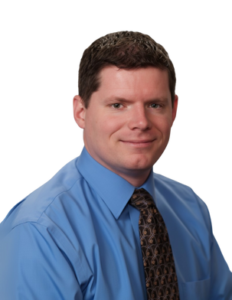
Individuals with OCD whose lives have been hijacked by intrusive thoughts and compulsions - and the families watching helplessly as their loved ones disappear behind anxiety-driven rituals - can need more than generic anxiety treatment to break free from what Dr. McGrath calls "the most selfish disorder in the world." Patrick McGrath has dedicated over 20 years to mastering Exposure and Response Prevention (ERP) therapy, becoming one of the world's leading OCD specialists and helping thousands of clients reclaim their lives through evidence-based treatment that works.
As Chief Clinical Officer for NOCD, the world's leading provider of virtual OCD therapy, and Lead Psychologist at Ascension Illinois Alexian Brothers Behavioral Health Hospital, Dr. McGrath brings unparalleled expertise in treating the full spectrum of OCD presentations. His Fellowship with the Association for Behavioral and Cognitive Therapies, membership on the Scientific and Clinical Advisory Boards of the International OCD Foundation, and role as Past President of OCD Midwest demonstrate his leadership in advancing OCD treatment. His books Don't Try Harder, Try Different (recipient of the Self Help Award of Merit from ABCT) and The OCD Answer Book have become essential resources for both practitioners and families navigating OCD recovery.
Dr. McGrath's expertise spans Obsessive-Compulsive Disorder, OCD-related disorders, Exposure and Response Prevention (ERP) therapy, anxiety disorders, school refusal, Body-Focused Repetitive Behaviors (BFRBs), and what he describes as helping families "get their loved ones back" from OCD. His approach recognises that effective OCD treatment requires specialised knowledge - generic CBT techniques can fail with OCD because they don't address the unique ways OCD hijacks normal thinking patterns. He specialises in severe and treatment-resistant OCD cases, helping clients who have struggled for years without success, and training other clinicians to deliver high-quality ERP therapy.
What sets his training apart is specialised expertise combined with compassionate understanding. McGrath doesn't just teach ERP techniques - he shows practitioners how to understand the specific ways OCD operates differently from other anxiety disorders and why standard anxiety treatments can make OCD worse. His journey from "neighborhood therapist" (helping friends' problems via phone in college) to world-renowned specialist reflects his deep personal commitment to this work.
For your practice, expect to gain specific ERP protocols for different OCD presentations, tools for working with families affected by OCD, and frameworks for distinguishing OCD from other anxiety disorders. His approach particularly benefits clinicians wanting to develop OCD specialisation, those working with treatment-resistant anxiety cases, or practitioners seeking to understand why traditional CBT approaches fail with OCD clients.
Quick Win: McGrath's "OCD vs. Anxiety distinction" framework helps practitioners identify when intrusive thoughts indicate OCD rather than generalised anxiety - potentially preventing months of ineffective treatment and enabling targeted ERP interventions that can create sustained improvement.
Qualifications
- Ph.D., Clinical Psychology, Northern Illinois University
- M.A., Clinical Psychology, Mississippi State University
- B.A., Psychology, University of Illinois
- Postdoctoral Fellowship, St. Louis Behavioral Medicine Institute, Saint Louis University, 1999–2001 (Mentor: Dr. C. Alec Pollard)
- Licensed Clinical Psychologist: Michigan, Illinois, Missouri
- Over 20 years OCD treatment experience
Authored Books
- Don't Try Harder, Try Different (stress management workbook, winner of the ABCT Self Help Book Merit Award)
- The OCD Answer Book (comprehensive OCD resource guide)
- Over 15 publications in peer-reviewed articles and professional publications
Professional Experience
- Lead Psychologist, Ascension Illinois Alexian Brothers Behavioral Health Hospital
- Assistant Vice President of Residential Services, AMITA Health Behavioral Medicine Institute
- Executive Director, Foglia Family Foundation Residential Treatment Center
- Clinical Director, Center for Anxiety and OCD, AMITA Health
- Clinical Director, School Anxiety/School Refusal Programs, AMITA Health
Training & Speaking
- Over 900+ talks and conference presentations throughout career
- International trainer for CBT, ERP, and Anxiety Disorders in USA, Australia, Turkey, and Italy
- Featured on Discovery Health Channel's documentary "Panic"
- Featured on three episodes of "Hoarding: Buried Alive" (TLC)
- Featured on National Public Radio and PBS
- Radio and TV appearances across the country
Clinical Specialties
- Obsessive-Compulsive Disorder (OCD) and OCD-related disorders
- Exposure and Response Prevention (ERP) therapy
- Treatment-resistant OCD and severe presentations
- School refusal and school anxiety disorders
- Body-Focused Repetitive Behaviors (BFRBs)
- Anxiety disorders, PTSD, and traumatic stress responses
- Co-occurring disorders (anxiety and addiction)
- Intensive treatment programs (partial hospital, residential)
Ready to become an effective OCD specialist and help clients break free from the tyranny of intrusive thoughts and compulsions? Discover how Dr. McGrath's specialised ERP methods can transform your understanding of OCD treatment and give you the specific tools needed to help clients reclaim their lives from this "most selfish disorder."
Feedback & Reviews
This course includes:
- Lessons 1
- Topics 4
- Duration 6 hours
- Quizzes 1
- Language English