

Treating Clients With a History of Abusive Relationships

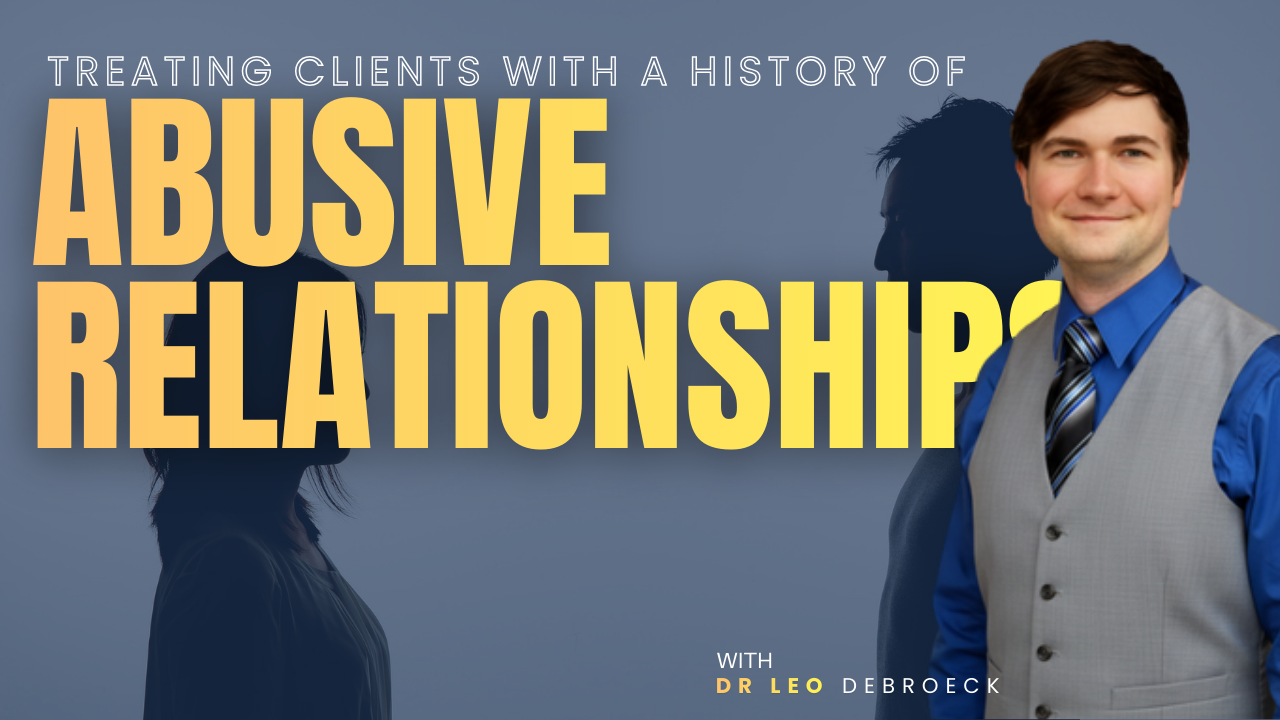
Leo DeBroeck starts this course with the history of a word, and it is not an academic detour. Codependency has meant substantially different things over the past fifty to a hundred years. Say it to an older client and they may hear something derogatory that you did not intend and cannot see, because the meaning they learned is not the meaning you are using. If you are working across a range of ages, that gap will cost you sessions before you notice it.
The rest follows the same logic: understand the problem precisely before reaching for interventions. His analogy is taking a car to a mechanic and saying fix it, at which point the first question is what is wrong. A client arrives with patterns formed in an abusive relationship, those patterns have underlying emotional needs and cognitive distortions holding them in place, and if the pattern is not identified it simply reappears in the next relationship with a different person in it.
Six hours from a clinician who works at a community health centre and delivers school-based therapy, seeing families on Medicaid who would never make it to an outpatient appointment. He covers how dependency develops, the DSM-5 criteria for dependent personality disorder, attachment styles, and the family relationship patterns that produce this. Then the practical half: measurable tools, established relationship frameworks, and skill practice rather than description.
You’ll walk away with
- Dependency and codependency defined precisely, and the history of both terms so you can use them safely with clients of any age
- Roles in relationships, what they are for, and why the rest makes no sense without them
- Five of the eight DSM-5 criteria for dependent personality disorder, and the impact that matters clinically
- Objective measurement of dependent emotional needs and behaviours, using questionnaires that track across time rather than impressions that do not
- What patterns in healthy relationships actually look like, as the comparison point
- Five family relationship styles that foster dependent behaviour
- Hands-on practice with the wheel of power and control, the four horsemen, love languages and the sound relationship house
- Transference when treating dependent clients, which arrives reliably and catches people out
- At least one intervention you can apply directly to unhealthy dependency
- Why an unaddressed pattern repeats in the next relationship, and what interrupting it requires
Watch the course trailer
CPD Information For Mental Health Professionals
Enjoy complete flexibility with 100% self-paced learning you can access anytime, anywhere, and on any device. This course is included with your Tatra Training membership, along with every other course in the library.
Course Duration: 6 learning hours
Certificate and CPD hours: On completion you’ll receive a Certificate of Completion to support your CPD records. Your certificates are yours to keep.
Assessment: Complete a short quiz at the end (80% pass mark), which you can resit as many times as needed.
Revisit Anytime: Come back to the course as often as you like while your membership is active, whenever you want a refresher for practice.
CPD Eligibility: This program may be suitable for CPD for professionals such as:
- Psychologists
- Counsellors and Psychotherapists
- Social Workers
- Community Workers
- Mental Health Nurses
- General Practitioners (GPs)
- Occupational Therapists
CPD requirements vary between professional bodies, so please check with your association or credentialing body to confirm you can claim CPD hours/OPD points for this program and what evidence they require.
Course Content
Meet Your Instructor

Children and adolescents experiencing suicidal ideation, complex trauma, and severe behavioral challenges - and the practitioners who work with them - can need more than generic therapeutic approaches to navigate these high-risk situations successfully. Leo DeBroeck has dedicated his career to developing practical, evidence-based interventions for the most vulnerable young people, becoming an internationally recognised expert who has worked across every level of care from intensive inpatient settings to school-based services.
As President and Founder of Counselor's Choice Award LLC and Licensed Mental Health Counselor with Child Mental Health Specialist credentials, DeBroeck brings unique expertise that bridges clinical practice with professional education and product development. His MS in Clinical Psychology with thesis research on suicide factors, combined with his CBT Plus certification from the University of Washington and Harborview Sexual Assault and Traumatic Stress Center, demonstrates his commitment to understanding the complex factors that put young people at risk. His published children's therapy books and scientific research on suicidality in young adults reflect his ability to create practical resources that help both clinicians and families navigate difficult conversations about mental health.
DeBroeck's expertise spans child and adolescent mental health, suicide prevention and assessment, trauma therapy, ADHD treatment, codependency, abusive relationships, grief counseling, and addiction counseling. His approach recognises that effective work with high-risk youth requires understanding family systems, school environments, and community resources while maintaining safety as the primary concern. He specialises in cases requiring intensive intervention, situations where standard outpatient therapy hasn't been sufficient, and training practitioners to work confidently with suicidal and severely traumatised children and adolescents.
What sets his training apart is real-world crisis experience combined with practical resource development. DeBroeck doesn't just teach theory - he shows practitioners exactly what to do and say in high-risk situations, drawing from years of intensive inpatient work and wraparound services. His development of therapeutic tools and children's therapy books demonstrates his understanding that effective intervention often requires creative, engaging approaches that meet young clients where they are.
For your practice, expect to gain specific suicide assessment techniques, tools for engaging resistant adolescents, and frameworks for coordinating care across multiple levels of intervention. His approach particularly benefits clinicians working with high-risk youth, those needing confidence in crisis situations, or practitioners wanting to develop expertise in intensive mental health services.
Quick Win: DeBroeck's "safety scaling" technique helps practitioners quickly assess suicide risk while building therapeutic rapport with adolescents - which helps create a foundation for honest communication about difficult topics while maintaining appropriate clinical vigilance.
Qualifications
- MS, Clinical Psychology (thesis: factors in suicide)
- Licensed Mental Health Counselor (LMHC), Washington State
- Child Mental Health Specialist (CMHS), Washington State
- Mental Health Professional (MHP)
- CBT Plus Certified, University of Washington and Harborview Sexual Assault and Traumatic Stress Center
Leadership & Business
- President & Founder, Counselor's Choice Award LLC, Washington State, current
- Continuing Education Course Provider, USA, Australia, Canada, UK, current
- Product reviewer for counseling and therapeutic tools
- International trainer and course developer
Professional Experience
- Mental Health Therapist, Community health center, Washington State (full-time with Licensed Marriage and Family Therapists team)
- Therapist, Intensive inpatient program, Spokane, Washington (children and adolescents focus, several years)
- Experience across multiple levels of care: long-term inpatient care, WISe wraparound intensive services, school-based therapy services, outpatient clinical settings
Clinical Specialties
- Child and adolescent mental health across all levels of care
- Suicide prevention, assessment, and intervention
- Complex trauma therapy for children and adolescents
- ADHD treatment and symptom management
- Codependency and relationship abuse recovery
- Grief counseling and loss processing
- Addiction counseling for adolescents and families
- Neglect and abuse recovery interventions
- Self-confidence building and resilience development
Ready to work confidently with high-risk children and adolescents while developing the crisis intervention skills essential for intensive mental health practice? Discover how Leo DeBroeck's evidence-based, practical methods can help you provide effective care across all levels of treatment intensity while maintaining safety and building genuine therapeutic relationships.
Feedback & Reviews
This course includes:
- Lessons 5
- Topics 0
- Duration 6 hours
- Quizzes 1
- Language English