

Anxiety, Anger, Sadness and Regret: Advanced Strategies of Emotional Utilization and Unconscious Process Work

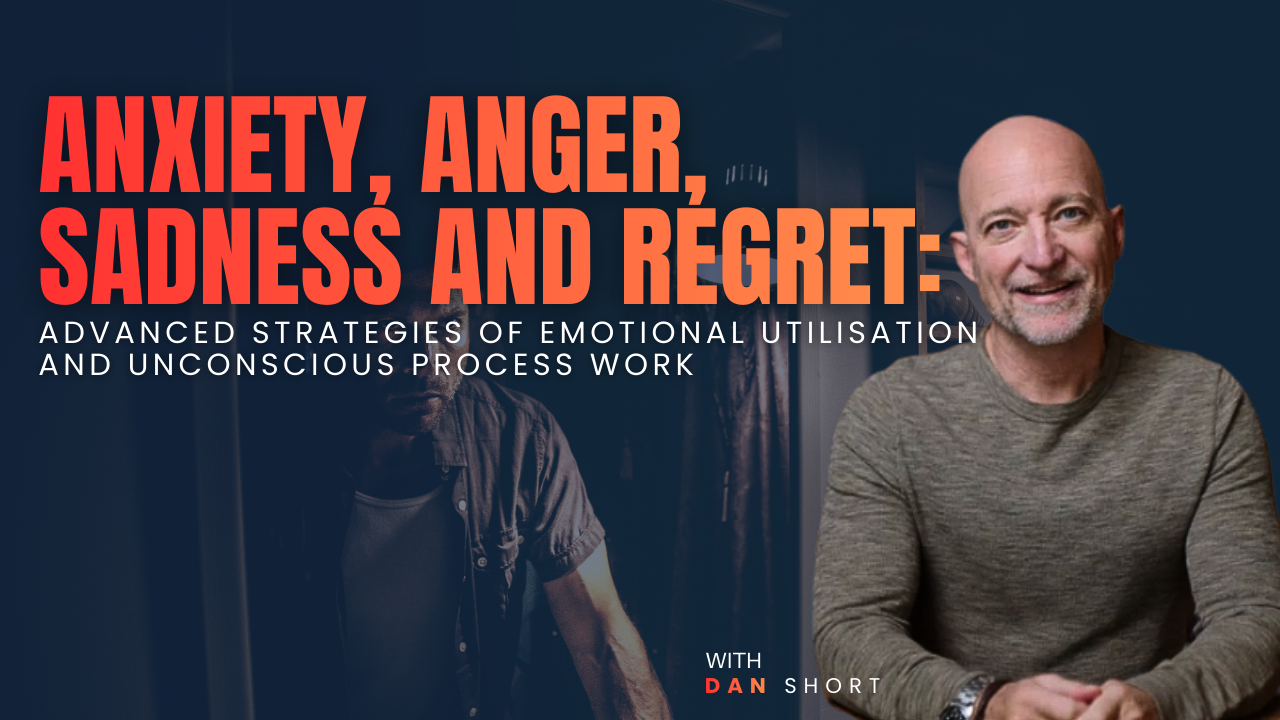
Dan Short opens this course with his own problem. The more capable he became as a therapist, a father and a husband, the more clearly he could see the things he had got wrong, and the more regret he had accumulated. It was not going away, and the usual advice about letting it go struck him as useless. So he went at it with the tool he trusts most, which is utilisation: rather than getting rid of an emotion, find out what it is for and put it to work.
That is the argument of the whole six hours, applied to four emotions that regularly take people apart. Regret, anxiety, anger and sadness. Most therapy sets out to reduce these or to reason a client out of them. He works with the energy that is already there, on the grounds that it is the most reliable thing in the room and that trying to impose change on a client is the slower and less certain route.
The material is specific rather than philosophical. Regret of inaction turns out to be the kind people cannot shake, and it can be used prospectively, imagining forward into a decision to find what you would regret. Anger read as a warning system, and the difference between defiant anger and desperate anger, which need opposite responses. Sadness, and why the people who feel it most are so often told to harden up. Emotional counterbalances, where hope displaces severe depression and compassion displaces anger, as distinct from emotional complements that sit alongside each other. Reading the face as the entry point. Throughout, he works with live participants rather than lecturing, so you see the moves made rather than described.
You’ll walk away with
- Utilisation applied to emotion: working with the state a client arrives in rather than trying to remove it
- Regret handled as a clinical target, including regret of inaction and why it is the kind that lasts
- Prospective regret used deliberately, to help a client test a decision before they make it
- Anger as a signalling system, and the difference between defiant anger and desperate anger in session
- Responding to anger directed at you, and why it is sometimes the client practising something they need
- Sadness, emotional contagion, and what happens when a client’s sadness meets your own held-back sadness
- Emotional counterbalances and complements, with the pairings he uses and the reasoning behind them
- Reading facial expression as a way into emotional work
- Matching your response to the client’s emotional state, including when a bold challenge lands better than empathy
- How this fits with hypnotic work, and how much of it is ordinary conversation
Watch the course trailer
CPD Information For Mental Health Professionals
Enjoy complete flexibility with 100% self-paced learning you can access anytime, anywhere, and on any device. This course is included with your Tatra Training membership, along with every other course in the library.
Please note: Dan Short teaches this material within an Ericksonian hypnotic frame, though most of what he demonstrates happens in ordinary conversation. No hypnosis training is assumed.
Where this sits: the most advanced of Dan Short’s emotion courses. Emotional Process Work in a Multi-Therapy Context covers the groundwork and is the better starting point if this is new territory.
Course Duration: 6 learning hours
Certificate and CPD hours: On completion you’ll receive a Certificate of Completion to support your CPD records. Your certificates are yours to keep.
Assessment: Complete a short quiz at the end (80% pass mark), which you can resit as many times as needed.
Revisit Anytime: Come back to the course as often as you like while your membership is active, whenever you want a refresher for practice.
CPD Eligibility: This program may be suitable for CPD for professionals such as:
- Psychologists
- Counsellors and Psychotherapists
- Social Workers
- Community Workers
- Mental Health Nurses
- General Practitioners (GPs)
- Occupational Therapists
CPD requirements vary between professional bodies, so please check with your association or credentialing body to confirm you can claim CPD hours/OPD points for this program and what evidence they require.
Course Content
Meet Your Instructor

Traditional therapy approaches that rely heavily on conscious insight can miss the profound healing potential that emerges when clinicians learn to work with clients' unconscious resources. Dan Short has spent over three decades mastering the art and science of Ericksonian hypnosis, becoming one of the world's leading authorities on unconscious process work and brief therapeutic interventions.
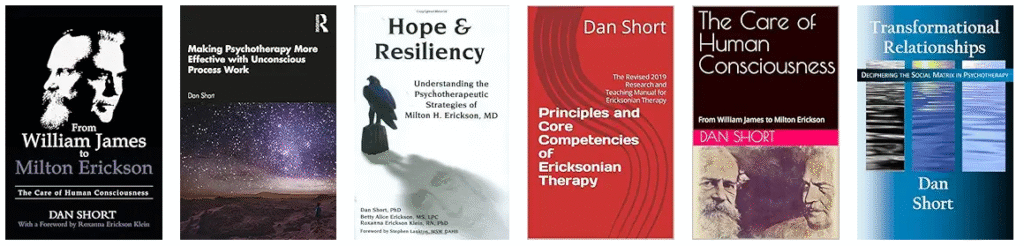
As Director of the Milton H. Erickson Institute of Phoenix and Executive Director of the Phoenix Institute of Ericksonian Therapy, Dr. Short represents the direct lineage of Milton Erickson's revolutionary approach to psychotherapy. His book Hope and Resiliency, co-authored with Betty Alice Erickson and Roxanna Erickson Klein, has been translated into seven languages and stands as a definitive guide to Ericksonian principles. His extensive research includes over 1,500 hours studying the original Erickson archives, giving him unparalleled insight into the master therapist's methods.
Dr. Short's expertise spans Ericksonian hypnosis, brief therapy, domestic violence treatment, trauma therapy, and couples/family therapy. His approach demonstrates how therapeutic relationships themselves become vehicles for transformation when practitioners learn to engage clients' unconscious wisdom. He specialises in showing clinicians how small shifts in language, timing, and therapeutic presence can create profound changes that bypass conscious resistance and accelerate healing.
What sets his training apart is depth combined with practical application. Short doesn't just teach hypnotic techniques - he shows practitioners how to cultivate the therapeutic artistry that makes Ericksonian approaches so effective. His international teaching at institutes in France, Italy, Spain, Mexico, and Japan gives him cross-cultural insights into how unconscious processes operate across diverse populations.
For your practice, expect to gain specific skills in therapeutic hypnosis, tools for accessing clients' unconscious resources, and frameworks for creating transformational therapeutic relationships. His methods particularly benefit clinicians who want to move beyond symptom-focused approaches to facilitate deeper, more lasting change.
Quick Win: Short's "therapeutic choice architecture" technique helps clinicians structure conversations so clients naturally discover their own solutions - often creating breakthrough insights that traditional directive approaches miss.
Qualifications
- Ph.D., Counseling Psychology, University of Massachusetts Amherst, 2000
- M.A., Counseling, University of North Texas, 1993
- APA-accredited internship, Houston, TX, 1996
- Licensed Clinical Psychologist
- Nearly 30 years of clinical experience
- Over 1,500 hours of research in Milton Erickson archives
Authored Books
- Making Psychotherapy More Effective with Unconscious Process Work (2020)
- From William James to Milton Erickson: The Care of Human Consciousness (2020)
- Transformational Relationships (2010, Zeig, Tucker & Theisen)
- Hope and Resiliency (2005, co-author with Betty Alice Erickson & Roxanna Erickson Klein, Crown House Publishing, translated into Spanish, French, German, Italian, Japanese, Russian)
Teaching & Roles
- Director, Milton H. Erickson Institute of Phoenix
- Executive Director, Phoenix Institute of Ericksonian Therapy
- Adjunct Faculty, International Society of Hypnosis (ISH) Educational Board
- Clinical Instructor, Southwest College of Naturopathic Medicine
- Visiting Faculty, Various Ericksonian Institutes Worldwide
- Former Associate Director, Milton H. Erickson Foundation
- Former Executive Editor, Milton H. Erickson Foundation Newsletter (5 years)
Professional Practice
- Private Practice Psychologist, Scottsdale, AZ, 2003–present
- Clinical Supervisor, Graduate interns, various programs, ongoing
- Former Graduate Faculty Member, Argosy University
- Consultation groups for professionals, Phoenix metropolitan area
Featured Publications
- Multiple professional articles, book chapters, treatment manuals
- Blog author, Behavior.net
- Collaborative author, SAGE Encyclopedia of Counselling and Theory
- Academic researcher with extensive publications in professional journals
Speaking & Training
- International conference faculty worldwide
- Milton H. Erickson Foundation conference presenter
- Visiting faculty: France, Italy, Spain, Mexico, Japan
- YouTube presentations on Ericksonian therapy
- Global educational workshops and seminars
Ready to unlock your clients' unconscious healing resources? Discover how Dr. Short's Ericksonian methods can transform your therapeutic presence and help clients access profound change through their own innate wisdom.
Feedback & Reviews
This course includes:
- Lessons 5
- Topics 0
- Duration 6 hours
- Quizzes 1
- Language English