

Grief Therapy: Clinical Tools to Assess and Treat Normative and Prolonged Grief Disorder

A client apologises for their grief. It was only a dog. Other people have real problems. They lost a pregnancy nobody knew about, or a marriage, or a parent they had not spoken to in years, or the version of their life they expected to have. Whatever it was, they have already decided it does not count, and they arrive braced for you to agree.
That is disenfranchised grief, and Christina Zampitella’s position is that learning to recognise it is the most useful thing a clinician takes from any grief training. It is also the part almost nobody was prepared for. Death, loss and grief barely appear in most clinical programs, which leaves practitioners working with bereaved clients constantly and formally trained for none of it.
Twelve hours across two days. The first covers assessment, including grief intensity measures and screening for depression, substance use, trauma and suicidal ideation, then diagnosis of prolonged grief disorder against DSM-5-TR criteria, the contemporary models that replaced stage theory, and the interventions: narrative and meaning reconstruction, mindfulness for anticipatory grief, creative and ritual work, and a clear position on where CBT belongs in grief work and where it does not. The second day moves to traumatic grief and suicide loss, structuring and running grief groups, culture and its effect on what a client is permitted to feel, and the ethics and self-care of doing this work at all.
You’ll walk away with
- The ability to recognise disenfranchised grief, and the losses a client will never raise unless you ask about them directly
- Two named grief assessment measures, alongside screening for depression, substance use, trauma and suicidal ideation in a bereaved client
- The DSM-5-TR criteria for prolonged grief disorder, and why the time criterion has to be read against a client’s culture rather than applied flat
- The distinction between grief counselling and grief treatment, and an honest account of which of the two a training like this qualifies you to do
- A clear position on where CBT belongs in grief work and where it does not, which corrects the approach most clinicians default to
- Narrative and meaning reconstruction methods for a client whose life story no longer works and has to be rebuilt
- Therapeutic rituals you can build with a client for the losses that have none, including miscarriage, divorce and ambiguous loss
- The continuing bonds model, and why severing the relationship with the person who died was never the goal
- A way to work with non-death and living losses, from disability and dementia to incarceration, where the person is present and the relationship is gone
- Approaches for suicide and overdose loss, including the guilt, the questions the family will not ask aloud, and what other people say that makes it worse
Watch the course trailer
CPD Information For Mental Health Professionals
Enjoy complete flexibility with 100% self-paced learning you can access anytime, anywhere, and on any device. This course is included with your Tatra Training membership, along with every other course in the library.
Course Duration: 12 learning hours
Certificate and CPD hours: On completion you’ll receive a Certificate of Completion to support your CPD records. Your certificates are yours to keep.
Assessment: Complete a short quiz at the end (80% pass mark), which you can resit as many times as needed.
Revisit Anytime: Come back to the course as often as you like while your membership is active, whenever you want a refresher for practice.
CPD Eligibility: This program may be suitable for CPD for professionals such as:
- Psychologists
- Counsellors and Psychotherapists
- Social Workers
- Community Workers
- Mental Health Nurses
- General Practitioners (GPs)
- Occupational Therapists
CPD requirements vary between professional bodies, so please check with your association or credentialing body to confirm you can claim CPD hours/OPD points for this program and what evidence they require.
Course Content
Meet Your Instructor
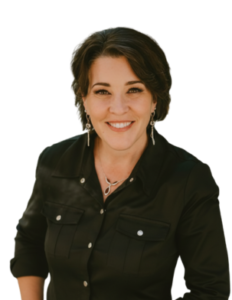
Grief and trauma that traditional therapy approaches struggle to address require clinicians who understand the unique landscape of loss. Christina Zampitella has devoted more than three decades to becoming one of the world's leading thanatologists - psychologists who specialise in death, loss, and bereavement - transforming how practitioners understand and treat complex grief.
As founder and director of the Center for Grief and Trauma Therapy in Delaware and host of the "Phoenix Rising with Dr. Z" podcast, Dr. Zampitella bridges clinical expertise with lived experience of loss. Her designation as Fellow of Thanatology by the Association for Death Education and Counseling, combined with her Outstanding Doctor of Clinical Psychology Award from California School of Professional Psychology, reflects her commitment to advancing grief therapy as a specialised field.
Dr. Zampitella's expertise spans thanatology, traumatology, EMDR, nature-based therapy, narrative psychotherapy, and meaning reconstruction approaches. Her work with diverse populations - across all cultural, gender, and religious backgrounds - gives her unique insights into how loss affects different communities. She integrates mind, body, and spirit approaches, showing clinicians how to honor clients' cultural backgrounds, spiritual beliefs, and individual grief expressions.
What sets her training apart is authentic understanding. Zampitella doesn't just teach grief theory - she shows practitioners how to sit with profound loss, recognise when grief becomes complicated, and differentiate grief symptoms from other mental health conditions. Her international speaking and training engagements, combined with her faculty role at the Portland Institute for Loss and Transition, demonstrate her dedication to mentoring emerging clinicians and advancing the field.
For your practice, expect to gain specific skills in assessing complicated versus uncomplicated grief, practical interventions for trauma-related loss, and tools for supporting clients through various types of bereavement. Her approach particularly benefits clinicians who want to specialise in grief work or feel unprepared to address loss in their current practice.
Qualifications
- PsyD, Clinical Psychology, Alliant International University (California School of Professional Psychology), 2005
- M.A., Clinical Psychology, Alliant International University
- M.A., Counseling Psychology, Immaculata University, PA
- B.A., Psychology, University of Delaware
- Fellow of Thanatology (FT), Association for Death Education and Counseling, 2010
- Licensed Clinical Psychologist: Delaware (#B1-0001010), California (#PSY20878)
- Grief Therapy as Meaning Reconstruction Certification
- Certified Grief Informed Professional (CGP)
- Mindfulness-Based Stress Reduction (MBSR) certified
- Certified in yoga nidra
- EMDR trained
Teaching & Roles
- Founder & Director, Center for Grief and Trauma Therapy, Wilmington, DE
- Host, "Phoenix Rising with Dr. Z" podcast
- Associate Professor, National University, CA
- Adjunct Professor, Goldey-Beacom College, DE
- Faculty member, Portland Institute for Loss and Transition
Speaking & Training
- International speaker and trainer in grief and trauma therapy
- ADEC (Association for Death Education and Counseling) conference presenter
- Professional training nationwide
Ready to develop specialised expertise in grief and trauma? Discover how Dr. Zampitella's thanatology-based methods can enhance your ability to support clients through their most difficult losses.
Feedback & Reviews
This course includes:
- Lessons 9
- Topics 0
- Duration 12 hours
- Quizzes 1
- Language English