

Trauma and PTSD: An Integrative Cognitive Approach

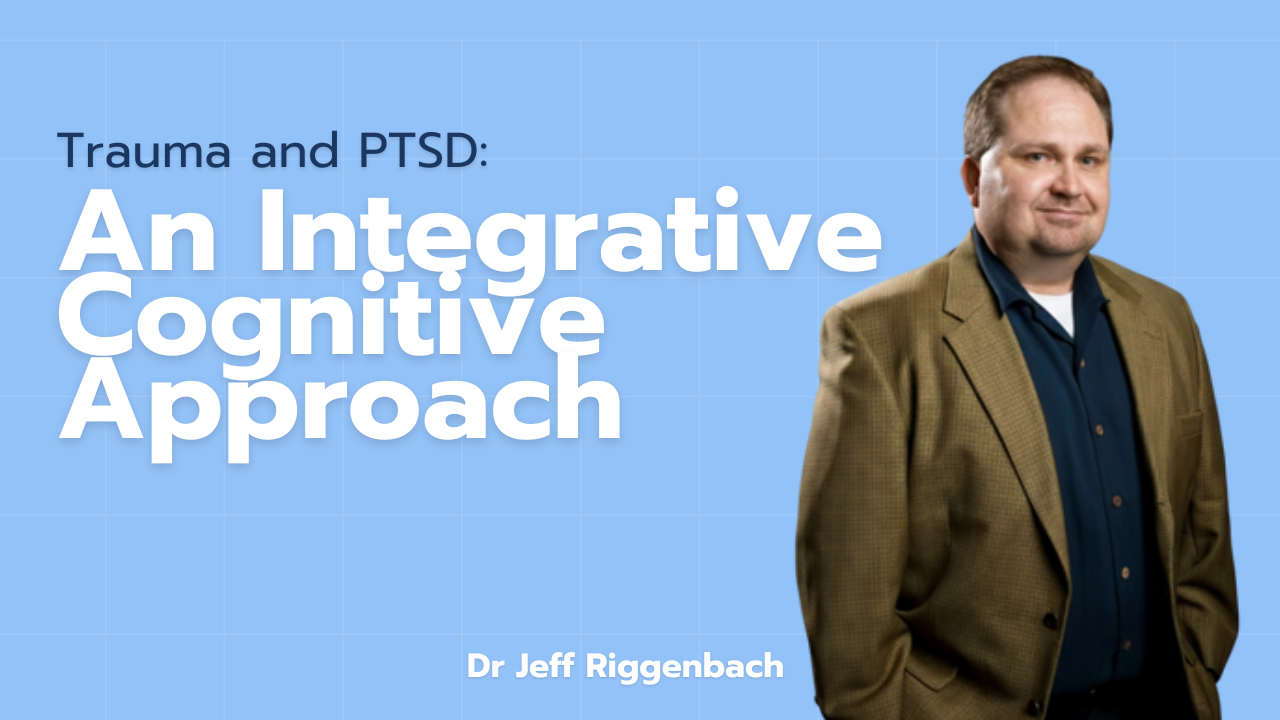
There is a great deal on trauma at the moment, and Jeff Riggenbach’s observation is that clinicians trained more recently often skip past the approaches with the longest evidence behind them. Prolonged Exposure, Cognitive Processing Therapy and Cognitive Therapy are still frontline, and they are closer to one another than their separate names suggest. Strip back the protocols and the mechanism of change is more or less identical. What differs is the packaging.
So this is a course about the mechanism rather than about certification in any one brand of it. He builds the model from cognition upward: the schemas a person already held before the event, how those shaped the way the event was processed, and how the event then reshapes the schemas. One in particular, the vulnerability schema, is what sets the whole threat-scanning process in motion. From there he links specific distorted appraisals to specific PTSD symptoms, which is the part that makes the treatment targets obvious rather than abstract.
Six hours in three stages. Stage one is psychoeducation, the rationale for exposure, consent, and the skills a client needs before anything is approached, including the grounding and stimulus discrimination work that gets arousal into the range where cognitive change is possible at all. Stage two is the exposure work and facilitating a trauma narrative. Stage three is the part that often gets left off: moral injury, guilt and shame, reassembling disjointed memory, coming out of hiding, and post-traumatic growth.
You’ll walk away with
- Trauma and PTSD separated properly, along with where the DSM-5 reclassification left the diagnosis and where complex PTSD sits in relation to it
- The shared mechanism running under the main exposure protocols, and the specific points where their procedures differ, so you can work coherently rather than switching brands
- Early maladaptive schemas applied to trauma, including the vulnerability schema that starts the threat scanning, and the reciprocal relationship between what a person already believed and how they processed what happened
- Cognitive distortions mapped onto individual PTSD symptoms and behaviours, which turns a symptom list into a set of treatment targets
- Three kinds of avoidance, cognitive, affective and behavioural, and why each needs addressing differently
- The affect window: what to do when arousal is too high for cognitive work to land, and the de-escalation and grounding that comes first
- Stimulus discrimination as a working technique, helping a client separate what is real now from what was real then, in specific sensory detail
- A structure for facilitating a trauma narrative, and where the protocols differ on how it is done
- Nightmare rescripting for recurring nightmares
- Stage three work most trauma training leaves out: moral injury, shame-based cognitions, and a silver lining approach to post-traumatic growth that follows acceptance rather than replacing it
Watch the course trailer
CPD Information For Mental Health Professionals
Enjoy complete flexibility with 100% self-paced learning you can access anytime, anywhere, and on any device. This course is included with your Tatra Training membership, along with every other course in the library.
Course Duration: 6 learning hours
Certificate and CPD hours: On completion you’ll receive a Certificate of Completion to support your CPD records. Your certificates are yours to keep.
Assessment: Complete a short quiz at the end (80% pass mark), which you can resit as many times as needed.
Revisit Anytime: Come back to the course as often as you like while your membership is active, whenever you want a refresher for practice.
CPD Eligibility: This program may be suitable for CPD for professionals such as:
- Psychologists
- Counsellors and Psychotherapists
- Social Workers
- Community Workers
- Mental Health Nurses
- General Practitioners (GPs)
- Occupational Therapists
CPD requirements vary between professional bodies, so please check with your association or credentialing body to confirm you can claim CPD hours/OPD points for this program and what evidence they require.
Course Content
Meet Your Instructor

High-conflict personalities, treatment-resistant clients, and complex cases involving borderline personality disorder can leave clinicians feeling frustrated and ineffective - but these challenging presentations don't have to derail therapeutic progress. Jeff Riggenbach has spent over 20 years developing practical, evidence-based tools that help transform how practitioners work with their most difficult cases, earning him international recognition as "the practical tools guy" and becoming one of the world's most sought-after trainers in cognitive behavioral interventions.
As a three-time bestselling, award-winning author and Diplomat of the Academy of Cognitive Therapy, Dr. Riggenbach brings unparalleled expertise in translating complex therapeutic concepts into immediately usable clinical tools. His books The CBT Toolbox and The BPD Toolbox (Amazon #1 new release) have become essential resources for practitioners worldwide, while his latest work Disarming High Conflict Personalities addresses one of the most challenging aspects of clinical and organisational work. His training at the Beck Institute of Cognitive Therapy and Research, combined with 20 years directing CBT-based treatment programs in psychiatric hospitals where he served over 3,000 clients, gives him deep understanding of what actually works with resistant populations.
Dr. Riggenbach's expertise spans Cognitive Behavioral Therapy, Dialectical Behavior Therapy, Schema-Focused Cognitive Therapy, personality disorders treatment (especially Borderline Personality Disorder), trauma and addiction, and high-conflict personality management. His approach bridges the gap between academic research and frontline clinical reality, showing practitioners how to adapt evidence-based techniques for clients who don't fit textbook presentations. He specialises in cases where traditional therapy approaches have failed, particularly with clients who are hostile, manipulative, or treatment-resistant.
What sets his training apart is practical applicability under real-world conditions. Riggenbach doesn't just teach theory - he shows clinicians exactly what to say and do when facing their most challenging moments. His international training reach across all 50 U.S. states, Canada, Mexico, UK, Malta, Australia, New Zealand, and South Africa demonstrates his ability to adapt techniques across diverse populations and practice settings.
For your practice, expect to gain specific intervention scripts for difficult situations, tools for managing your own emotional responses to challenging clients, and frameworks for maintaining therapeutic progress with treatment-resistant cases. His approach particularly benefits clinicians working in high-stress environments, those dealing with personality disorders, or practitioners who feel burned out from difficult cases.
Quick Win: Riggenbach's "emotional regulation interrupt" technique helps clinicians quickly de-escalate volatile therapeutic situations while maintaining professional boundaries - helping to prevent session ruptures and keeping treatment on track.
Qualifications
- Ph.D., Christian Counseling
- Licensed Professional Counselor (LPC), Oklahoma, current
- Diplomat of the Academy of Cognitive Therapy
- Certified Cognitive Therapist, Beck Institute of Cognitive Therapy and Research, Philadelphia
- John Maxwell Team Certified Speaker/Trainer/Coach
- Certified Behavioral Consultant
- 20+ years clinical experience
Authored Books
- Disarming High Conflict Personalities: Dealing with the 8 Most Difficult People in Your Life Before You Burnout (latest release)
- The BPD Toolbox: A Practical Evidence-Based Guide to Regulating Intense Emotions (2016, Amazon #1 new release, award-winning)
- The CBT Toolbox: A Workbook for Clients, Clinicians and Coaches (2012, 1st and 2nd editions, bestseller)
- Seven total publications
Professional Experience
- International Speaker/Trainer/Coach, John Maxwell Team, current
- Clinical Director, Private Practice/Consulting, current
- Award-Winning Author & Behavioral Consultant, Tulsa, OK, current
- APA & NBCC/ACEP Approved Provider, Continuing Education Credits, current
- Director, CBT-based treatment programs, Two psychiatric hospitals (20 years, served 3,000+ clients)
- Treatment Program Developer, Mood Disorder, Anxiety Disorder, BPD programs, Two psychiatric hospitals
- Staff Member, Brookhaven Psychiatric Hospital, Tulsa, OK
International Training Reach
- Trained audiences in all 50 United States, Canada, Mexico, UK, Malta, Australia, New Zealand, South Africa, Ireland
- Conference keynote addresses and specialised workshops worldwide
Ready to work confidently with your most challenging clients? Discover how Dr. Riggenbach's practical, evidence-based tools can help transform your ability to achieve breakthrough results with treatment-resistant cases while maintaining your own professional well-being.
Feedback & Reviews
This course includes:
- Lessons 6
- Topics 0
- Duration 6 hours
- Quizzes 1
- Language English