

Borderline Personality Disorder: Management, Treatment and Communication Strategies

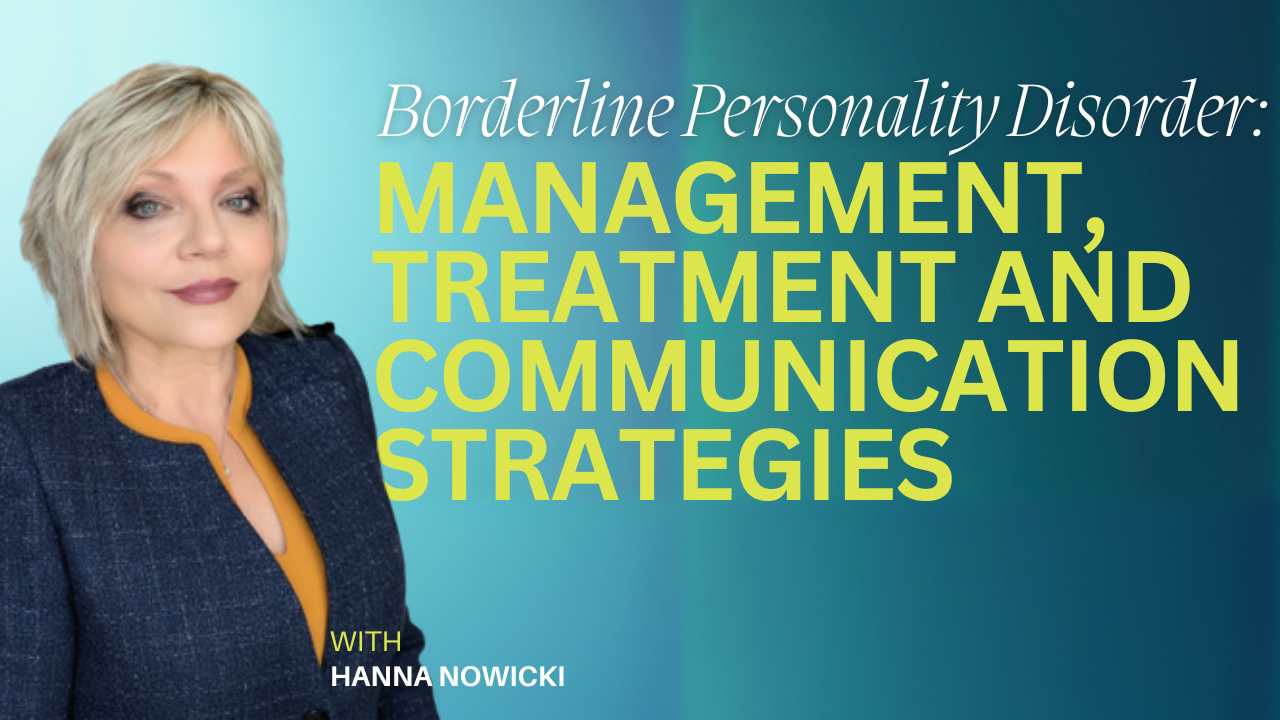
Clinicians tend to train in one model and work from it. With borderline presentations, Hanna Nowicki argues, that is precisely where things stall: focusing on a single treatment modality will often not give these clients the results they urgently need. Her approach draws on DBT, CBT, schema therapy and neurobiological stabilisation, taking what each does well rather than asking a client to fit whichever one you happen to hold.
Before any of that, she spends real time on getting the diagnosis right. Borderline presentations are confused with bipolar disorder, with ADHD, with substance use, and with complex and chronic PTSD, and the wrong answer sends a client down years of the wrong treatment. She also covers traits that are recognisably part of the picture without appearing in the DSM criteria.
Six hours, with communication treated as a clinical skill rather than a bedside manner. She teaches the SET approach and six levels of validation, which are the tools that make a session survivable for both people in it. She covers splitting and the pitfalls clinicians reliably fall into, working with schemas, managing your own counter-transference, and chronic suicidality, which she treats as its own problem rather than as a version of acute risk. There is also material for people who are not therapists but work alongside these clients.
You’ll walk away with
- Rapid assessment and differential diagnosis against bipolar disorder, ADHD, substance use and complex or chronic PTSD
- Traits that belong to the picture but are not in the DSM-5 criteria
- An integrative treatment approach drawing on DBT, CBT, schema therapy and neurobiological stabilisation
- The SET communication strategy, and six levels of validation
- Splitting, and the treatment pitfalls clinicians walk into most often
- Working with schemas, and managing counter-transference before it manages you
- Chronic suicidality handled as its own clinical problem
- Limit-setting and emotional regulation strategies
- Adjunctive strategies for professionals who are not therapists but work with these clients
- Early prevention, and what can be done before a presentation entrenches
- Interactive exercises rather than description, in therapeutic and organisational settings
Watch the course trailer
CPD Information For Mental Health Professionals
Enjoy complete flexibility with 100% self-paced learning you can access anytime, anywhere, and on any device. This course is included with your Tatra Training membership, along with every other course in the library.
Where this sits: this is the in-depth course on borderline presentations. A separate twelve-hour course covers all ten personality disorder types.
Course Duration: 6 learning hours
Certificate and CPD hours: On completion you’ll receive a Certificate of Completion to support your CPD records. Your certificates are yours to keep.
Assessment: Complete a short quiz at the end (80% pass mark), which you can resit as many times as needed.
Revisit Anytime: Come back to the course as often as you like while your membership is active, whenever you want a refresher for practice.
CPD Eligibility: This program may be suitable for CPD for professionals such as:
- Psychologists
- Counsellors and Psychotherapists
- Social Workers
- Community Workers
- Mental Health Nurses
- General Practitioners (GPs)
- Occupational Therapists
CPD requirements vary between professional bodies, so please check with your association or credentialing body to confirm you can claim CPD hours/OPD points for this program and what evidence they require.
Course Content
Meet Your Instructor

Frontline mental health professionals struggling with complex cases - from suicidal clients to challenging personality disorders - need more than theoretical knowledge to make real-world impact. Hanna Nowicki has spent over 30 years bridging the gap between academic concepts and practical application, becoming one of Australia's leading mental health trainers and helping over 20,000 professionals develop confidence with their most difficult cases.
As Founder of TATRA, Nowicki brings a unique combination of legal expertise, psychology training, and extensive frontline experience to her teaching. Her remarkable career journey - from District Court Judge in Poland dealing with family law to Senior Practitioner in South Australia's Statewide Suicide Intervention Program - gives her unparalleled insight into both systemic and individual approaches to mental health crisis intervention. Her multilingual abilities and multicultural practice experience add crucial cultural competency to her training programs.
Nowicki's expertise spans suicide risk assessment, personality disorders, self-injury, depression, anxiety disorders, client engagement techniques, workplace debriefing, and multicultural mental health practice. Her approach focuses on practical "know-how" rather than abstract theory, showing professionals exactly what to do and say in challenging situations. She specialises in training professionals who work with high-risk populations, including those in child protection, correctional services, and community mental health settings.
What sets her training apart is real-world credibility. Nowicki doesn't just teach from textbooks - she draws from decades of direct practice in suicide prevention, child protection, and mental health services. Her work with government organisations like Centrelink, Correctional Services, and Housing SA demonstrates her ability to translate clinical knowledge into practical strategies that work in diverse professional settings.
For your practice, expect to gain specific techniques for engaging resistant clients, practical tools for suicide risk assessment, and frameworks for working effectively with personality disorders. Her interactive, high-energy teaching style particularly benefits practitioners who need confidence-building alongside skill development.
Quick Win: Nowicki's "engagement hierarchy" technique helps professionals quickly establish rapport with defensive or hostile clients by matching their communication approach to the client's presenting style - often creating breakthrough connections in the first encounter.
Qualifications
- LLM, Law, University of Adam Mickiewicz, Poznan, Poland, 1979–1983
- Postgraduate studies: Social Psychology, Psychology of Crime, Pathological Psychology, Criminology, University of Adam Mickiewicz, Poland, 1984–1985
- BA, Psychology, Flinders University, Australia
- Postgraduate Degree, Social Administration, Flinders University, Adelaide, 1992–1994
- Certificate IV in Training & Workplace Assessment
- Accredited De-briefer and Workplace Trainer
- Multilingual (speaks four languages)
Career & Leadership
- Founder, TATRA Corporate and Allied Health Training Services
- Professional Trainer & Speaker, Mental Health Education, Australia-wide, 1996–present
- State Manager, SA Mental Health Training Centre, NSW Institute of Psychiatry, 2005–2008
- Senior Practitioner, Statewide Suicide Intervention Program, South Australia, 1996–2005
Professional Background
- District Court Judge (Family Law), Poland, 1985–1989
- Legal Practitioner, Poland, early 1980s
- Social Worker, South Australian Mental Health Services, Adelaide, 1993–1996
- Child Protection Worker
- University Lecturer, Social Policy
Specialised Expertise
- Suicide risk assessment and intervention
- Personality disorders diagnosis and management
- Self-injury and self-harming behavior
- Depression and anxiety disorders
- Client engagement techniques for difficult cases
- Workplace debriefing and crisis response
- Multicultural mental health practice
Ready to transform your confidence with challenging mental health cases? Discover how Hanna Nowicki's practice-based approach can give you the real-world skills and cultural competency needed to make a genuine difference with your most difficult clients.
Feedback & Reviews
This course includes:
- Lessons 8
- Topics 0
- Duration 6 hours
- Quizzes 1
- Language English