
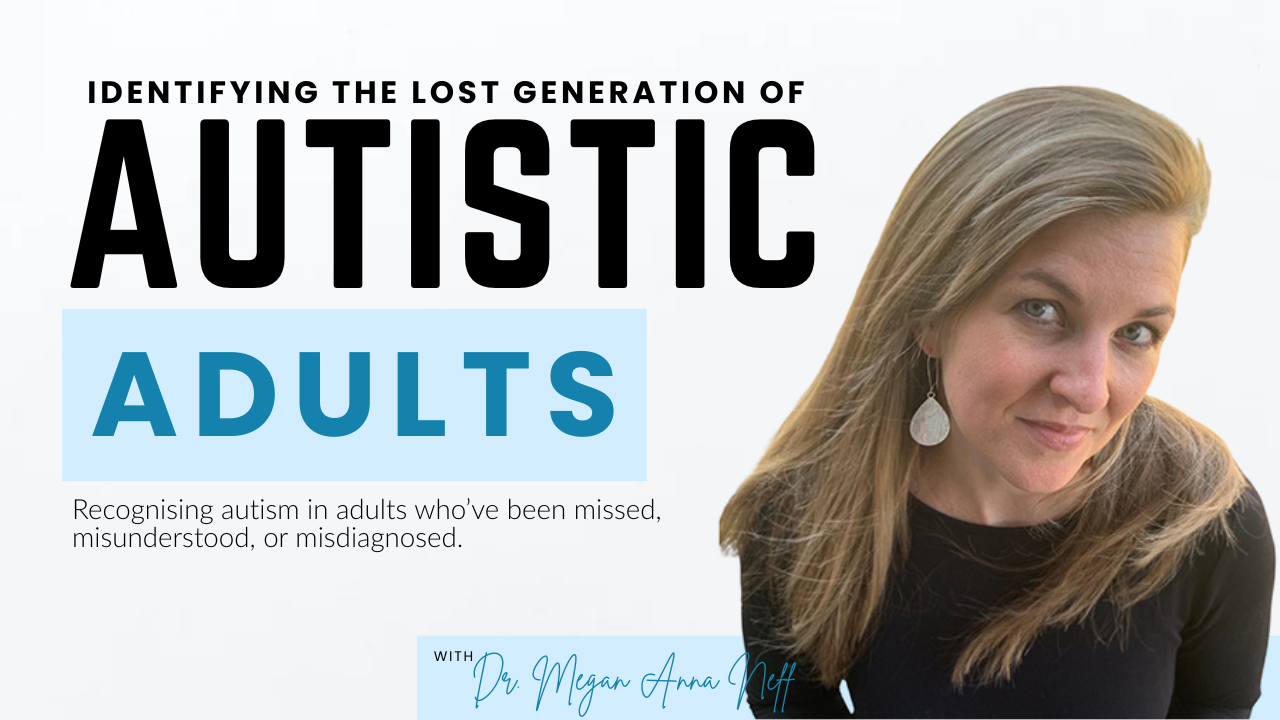
Identifying the Lost Generation of Autistic Adults

Members
Already a Tatra member?
Log in to start this course, pick up where you left off, or save it to your favourites for later.
Not a member yet?
This course is included in Tatra membership
- Try it free for 7 days
- Learn from our entire 150+ course library for what one course costs.
- Watch on desktop, TV or mobile, whenever it suits you
- New courses added regularly
- CPD certificate when you complete each course
Somewhere in your caseload there’s a client with a long history of anxiety, depression or disordered eating. They’ve seen a string of therapists who never quite helped, and they carry a quiet sense that they’re broken. They may be autistic. Nobody has asked.
A 2022 Swedish study found that close to one in five adults in general outpatient psychiatric care met the criteria for autism. Only about half of one per cent had a diagnosis. These are adults who grew up before the diagnostic criteria widened, who learned early to mask, and who look nothing like the stereotype most of us trained with. Dr Megan Anna Neff calls them the lost generation.
Megan is an autistic psychologist. During her own training, a personality assessment flagged autism, and it still took her five years to see it in herself. In this course she brings both sides of that experience to the questions you’re likely already facing: how masking hides autism in plain sight, how the DSM-5-TR criteria show up in adults who don’t fit the textbook, and why the clinical picture so often looks like trauma, OCD, BPD or treatment-resistant depression.
You’ll follow Penny, a 32-year-old new mother with postpartum depression, intrusive thoughts and a history of anorexia and self-harm, as Megan maps each criterion onto her story. You’ll also get a practical rundown of the screeners worth adding to your intake paperwork, including the AQ-10, RAADS-14, CAT-Q and RBQ-2A, and how to use them whether or not your registration allows you to diagnose.
The stakes are high. Undiagnosed autistic adults are over-represented among people seeking help for substance use, eating disorders, depression and suicidality. For many of them, an accurate identification is the first thing that makes sense of everything else. As Megan’s own therapist once put it, they carry “the marks of the bear, but no bear”.
You’ll walk away with
- A clear understanding of who the lost generation of autistic adults are and why so many were missed
- Answers to the common myths that stop clinicians, and clients, from considering autism
- The ability to recognise compensation, masking and assimilation, and why masking takes such a toll on mental health
- A working knowledge of the DSM-5-TR criteria for autism, including how they present in adults who don’t fit the stereotype
- Follow-up questions that uncover hidden repetition, islands of inflexibility, special interests and sensory differences
- A better eye for the muddy clinical picture, where autism sits beneath anxiety, OCD, PTSD, eating disorders or depression
- An understanding of how diagnostic overshadowing happens, and how to keep autism on your list of considerations
- A practical screening toolkit for intake and follow-up, with cut-offs, limitations and where to access each tool
- A clear case for why accurate identification matters, including its link to suicide risk and positive identity
- Megan’s course handout, with the Penny case study, DSM tables to fill in and a screener guide, plus her Autistic Masking Checklist
Watch the course trailer
CPD Information For Mental Health Professionals
Enjoy complete flexibility with 100% self-paced learning you can access anytime, anywhere, and on any device. This course is included with your Tatra Training membership, along with every other course in the library.
Course Duration: 3 learning hours
Certificate and CPD hours: On completion you’ll receive a Certificate of Completion to support your CPD records. Your certificates are yours to keep.
Assessment: Complete a short quiz at the end (80% pass mark), which you can resit as many times as needed.
Revisit Anytime: Come back to the course as often as you like while your membership is active, whenever you want a refresher for practice.
CPD Eligibility: This program may be suitable for CPD for professionals such as:
- Psychologists
- Counsellors and Psychotherapists
- Social Workers
- Community Workers
- Mental Health Nurses
- General Practitioners (GPs)
- Occupational Therapists
CPD requirements vary between professional bodies, so please check with your association or credentialing body to confirm you can claim CPD hours/OPD points for this program and what evidence they require.
Not a member yet?
Start Your 7 Day Free TrialCourse Content
Meet Your Instructor

Many autistic and ADHD adults reach a therapist after years of misdiagnosis, worn out from masking and unsure why the usual strategies haven't helped. Dr Megan Anna Neff is a clinical psychologist who has built her work around these clients, and around helping clinicians recognise and support them.
Dr Neff is the founder of Neurodivergent Insights, where she creates research-based education and clinical resources on autism, ADHD and AuDHD. She is the author of Self-Care for Autistic People and The Autistic Burnout Workbook, with AuDHD Unlocked due in 2027. She writes the Psychology Today blog The Neurodivergent Psychologist and co-hosts the Divergent Conversations podcast. Her work has featured in the LA Times, CNN and HuffPost, and she teaches clinicians internationally. Identified as autistic and ADHD in adulthood herself, she brings lived experience together with clinical training.
Her focus areas include adult autism and ADHD, less typical presentations, misdiagnosis, autistic burnout, masking, sensory processing, interoception and alexithymia. She helps clinicians understand how sensory and nervous system differences shape emotion and behaviour, and how to adapt therapy so it fits the client.
What sets her training apart is how she turns research into clear, usable resources. Her Misdiagnosis Monday series, for example, compares autism and ADHD with the conditions they're most often mistaken for. Clinicians leave with frameworks and worksheets they can use in their next session.
For your practice, expect to gain a clearer process for recognising autism and ADHD in adult clients, ways to tell autistic burnout apart from depression, and sensory and interoception tools for emotion regulation. Her approach particularly suits clinicians working with adults who have been missed or misdiagnosed, and those wanting to make their practice more neurodivergent-affirming.
Quick Win: Dr Neff's "sensory lens" helps clients notice how their environment affects their nervous system. Start with one of her five practices, a simple sensory journal, to track which settings drain or settle a client across the week.
Qualifications
- PsyD, Clinical Psychology
- MDiv, Princeton Theological Seminary
Authored Books
- The Autistic Burnout Workbook (2025, Adams Media)
- Self-Care for Autistic People (2024, Adams Media)
- Self-Care Activities for Autistic People (card deck, Adams Media)
- Embodying Integration (2020, IVP Academic, co-authored with Mark R. McMinn)
- AuDHD Unlocked (forthcoming 2027)
Media & Recognition
- Featured in the LA Times, CNN, HuffPost, Business Insider, Fast Company and Self
- TV and radio including PBS, KATU-2 ABC, KOIN-6 CBS and WGN Radio
- Author of The Neurodivergent Psychologist blog (Psychology Today)
Teaching & Roles
- Founder, Neurodivergent Insights
- Co-host, Divergent Conversations podcast
- Host, Neurodivergent Insights podcast
- Previously practised as a clinical psychologist in Oregon, providing neurodivergent-affirming therapy and assessment
Training & Speaking
- Panellist, Stanford Neurodiversity Project (2025)
- Teaches clinicians internationally, including in the US, UK and Australia
- Clinician courses on autistic burnout, sensory tools and traumatic invalidation
Want to recognise and support the neurodivergent adults in your caseload with more confidence? Explore Dr Neff's courses below.
Feedback & Reviews
This course includes:
- Lessons 9
- Topics 0
- Duration 3 hours
- Quizzes 1
- Language English