

Principles of Mindfulness

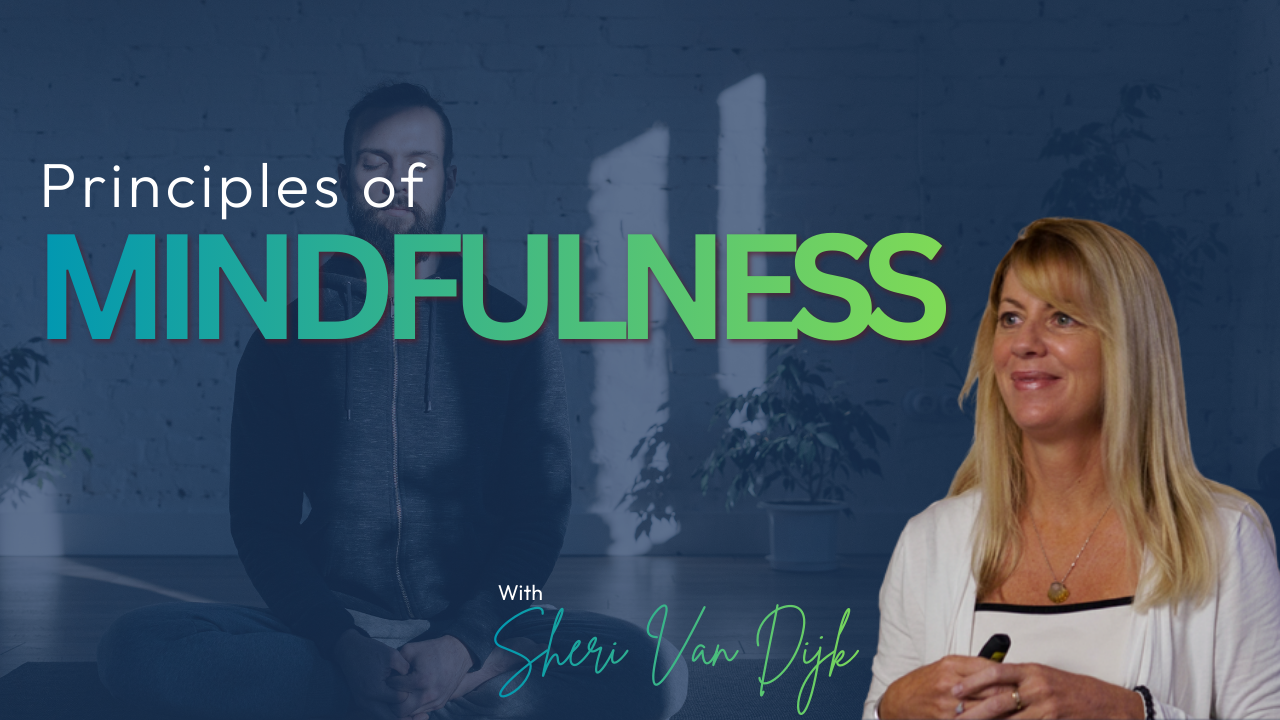
Sheri Van Dijk has had clients come to her group straight from a formal mindfulness course having had flashbacks in the room. They had a trauma history, they were told to close their eyes, and nobody had thought about it. She now teaches practitioners not to coach eyes closed when trauma is in the picture, and to make sure every client has practised with eyes open so they have the option.
That is the shape of this course. There is no shortage of places to learn to practise mindfulness. What is harder to find is the clinical judgement that goes with teaching it to someone else: which clients to be careful with, how long a practice should be for a person who is severely depressed, what to do when a client says it did not work, and why the debrief afterwards matters as much as the practice itself.
Three hours, and it is experiential rather than a lecture. She runs guided practices and takes you through the debrief she would do with a client or a group. She separates formal practice from informal practice and is honest that the majority of her own is informal, folded into walking, driving and conversation. And she is practical about the client in front of you: if the only mindfulness a client in a major depressive episode will do is watch television for two minutes with their phone away, then that is the practice, and she will show you how to set it up properly.
You’ll walk away with
- Working safely with clients who have a trauma history, starting with eyes open and why it matters
- Guided practices you take part in rather than watch, with the debrief demonstrated each time
- How to debrief a practice with an individual or a group, and what you are listening for
- Formal and informal practice separated, with realistic expectations of each
- Building a practice for a client who cannot manage a conventional one, including in severe depression
- The problems clients hit in the first few weeks, and how to answer them
- Where mindfulness sits inside DBT, and how that differs from other mindfulness traditions
- Explaining to a client why this is worth doing, in terms that hold up
- Teaching mindfulness in group as well as individual work
- Your own practice, which she treats as a prerequisite for teaching it rather than an optional extra
Watch the course trailer
CPD Information For Mental Health Professionals
Enjoy complete flexibility with 100% self-paced learning you can access anytime, anywhere, and on any device. This course is included with your Tatra Training membership, along with every other course in the library.
Where this sits: the shortest of Sheri Van Dijk’s five courses and a good place to start. Mindfulness is the module everything else in DBT sits on, and Calming the Emotional Storm covers the full skills training.
Format: experiential. You take part in the practices rather than watching them, so give yourself an uninterrupted stretch.
Course Duration: 3 learning hours
Certificate and CPD hours: On completion you’ll receive a Certificate of Completion to support your CPD records. Your certificates are yours to keep.
Assessment: Complete a short quiz at the end (80% pass mark), which you can resit as many times as needed.
Revisit Anytime: Come back to the course as often as you like while your membership is active, whenever you want a refresher for practice.
CPD Eligibility: This program may be suitable for CPD for professionals such as:
- Psychologists
- Counsellors and Psychotherapists
- Social Workers
- Community Workers
- Mental Health Nurses
- General Practitioners (GPs)
- Occupational Therapists
CPD requirements vary between professional bodies, so please check with your association or credentialing body to confirm you can claim CPD hours/OPD points for this program and what evidence they require.
Course Content
Meet Your Instructor

Individuals struggling with complex trauma, emotion dysregulation, and treatment-resistant mental health conditions - and the practitioners working with clients whose symptoms don't respond to traditional approaches - may need more than standard therapy to address the deep neurological patterns that drive emotional instability. Sheri Van Dijk has spent over 25 years mastering the integration of Dialectical Behavior Therapy (DBT) with EMDR and cutting-edge trauma treatments, becoming one of the world's leading experts in helping clients develop the emotion regulation skills essential for lasting recovery.
As a bestselling author with New Harbinger Publications and EMDRIA-Approved Consultant, Van Dijk brings exceptional expertise that bridges evidence-based therapy with practical accessibility. Her award-winning book The Dialectical Behavior Therapy Skills Workbook and The Dialectical Behavior Therapy Skills Workbook for C-PTSD (2025) demonstrate her unique ability to make complex therapeutic concepts immediately usable for both clients and practitioners. Her R.O. Jones Award from the Canadian Psychiatric Association for research on using DBT skills with bipolar disorder reflects her innovative work in expanding DBT applications beyond borderline personality disorder to help diverse populations develop emotional stability.
Van Dijk's expertise spans Dialectical Behavior Therapy, Eye Movement Desensitization and Reprocessing (EMDR), Complex PTSD treatment, trauma therapy, bipolar disorder, borderline personality disorder, and what she calls helping clients move from emotional chaos to emotional mastery. Her approach recognises that many clients struggle not because they lack motivation, but because they've never been taught the specific skills needed to regulate intense emotions effectively. She specialises in working with individuals who experience emotional overwhelm, those with complex trauma histories, clients with bipolar disorder or personality disorders, and practitioners wanting to develop expertise in evidence-based emotion regulation interventions.
What sets her training apart is practical skill-building combined with trauma-informed wisdom. Van Dijk doesn't just teach DBT theory - she shows practitioners exactly how to help clients develop the concrete skills they need to manage crisis situations, regulate intense emotions, and build the distress tolerance that makes recovery possible. Her integration of EMDR with DBT creates comprehensive approaches that address both trauma processing and skill development simultaneously.
For your practice, expect to gain specific DBT techniques for different diagnostic presentations, tools for integrating trauma processing with emotion regulation skills, and frameworks for making evidence-based therapies accessible to clients across various mental health conditions. Her approach particularly benefits clinicians working with emotion dysregulation, those treating complex trauma presentations, or practitioners wanting to develop expertise in DBT and EMDR integration.
Quick Win: Van Dijk's "TIPP" technique (Temperature change, Intense exercise, Paced breathing, Progressive muscle relaxation) helps clients regulate crisis-level emotions - to prevent self-harm or impulsive behaviors while building confidence in their ability to manage intense feelings.
Qualifications
- MSW, Social Work, University of Toronto, Canada, 2003–2004
- BSW, Social Work, York University, Canada, 2001–2003
- B.A., Sociology and Criminology, University of Toronto, Canada, 1993–1997
- Registered Social Worker (RSW), College of Social Workers and Social Service Workers
- EMDR-trained and EMDRIA-Approved Consultant
- Advanced training: Deep Brain Reorienting (DBR), Neurofeedback, Safe and Sound Protocol (SSP)
- 25+ years experience in mental health field
Authored Books
- The Dialectical Behavior Therapy Skills Workbook for C-PTSD (2025, New Harbinger Publications)
- Don't Let Your Emotions Run Your Life for Teens (bestseller, New Harbinger Publications)
- DBT Made Simple (2013, New Harbinger Publications)
- The Dialectical Behavior Therapy Skills Workbook for Bipolar Disorder (2009, New Harbinger Publications)
- Calming the Emotional Storm (New Harbinger Publications)
- The DBT Workbook for Emotional Relief (New Harbinger Publications)
- The Bipolar Workbook for Teens (co-author, New Harbinger Publications)
Professional Experience
- Psychotherapist, Private Practice, Newmarket, Ontario, Canada, December 2003–present (21+ years)
- EMDR Consultant, EMDRIA-Approved
- International Trainer and Consultant, DBT and EMDR
- Mental Health Therapist, Southlake Regional Health Centre, Outpatient Mental Health Clinic, March 2004–July 2018 (14+ years)
- Founder, Ananda Mental Health Workshops, Barrie, Ontario, January 2017–April 2020
Treatment Populations
- Individuals aged 16 and older
- Complex trauma survivors and C-PTSD presentations
- Clients with bipolar disorder and mood disorders
- Borderline personality disorder and emotion dysregulation
- Anxiety disorders, depression, and PTSD
- Eating disorders and substance use disorders (secondary to mental health issues)
Ready to help clients develop genuine emotion regulation skills while processing complex trauma? Discover how Sheri Van Dijk's integrated DBT and EMDR methods can transform your ability to help clients move from emotional chaos to emotional mastery through evidence-based skills designed to work in crisis situations.
Feedback & Reviews
This course includes:
- Lessons 2
- Topics 2
- Duration 3 hours
- Quizzes 1
- Language English