

Resilience and Post-Traumatic Growth: Healing from Loss and Trauma with Compassion, Clarity, and Courage

Course Content
Resilience gets talked about as though it were a personality trait, which leaves a clinician with nothing to do except hope the client has some. Linda Graham’s approach is to break it into four capacities that can each be strengthened deliberately: somatic, emotional, relational and reflective intelligence. Once it is divided that way you can tell which one is missing in the person in front of you, and you have something specific to work on.
She is a marriage and family therapist in the San Francisco Bay Area with close to thirty years in practice and two books on this subject. Her starting point is that the capacity for resilience is built into the brain, that early attachment either develops it or interferes with it, and that what interferes with it can be rewired. She is careful about how: the tools are experiential, and she is explicit about doing them safely rather than forcing them.
Four hours across five parts. Somatic intelligence first, since a nervous system still carrying the effects of stress cannot do any of the rest, including body-based tools and guided visualisation. Then emotional intelligence: managing disruptive emotions, deepening self-compassion, and cultivating positive emotions against a brain that weights the negative. Then relational intelligence in two directions, inward for shame and self-criticism, outward for asking for help, repairing ruptures, setting boundaries and forgiveness. Then reflective intelligence, using mindfulness to catch a coping pattern in the act and choose differently. She closes on post-traumatic growth and the five factors that predict it, which is the part that distinguishes growing from a trauma from merely getting past it.
You’ll walk away with
- Resilience broken into four trainable capacities, so you can tell which one a client is missing
- The difference between stressors, stress and trauma, and why the distinction changes the intervention
- How early attachment builds or blocks resilience, including what each insecure style produces in an adult client
- Five body-based regulation tools for a nervous system still carrying the effects of stress
- Three guided visualisation practices, and the reasoning behind why imagined experience registers
- Self-compassion practices, and cultivating positive emotion against the brain’s negativity bias
- Working with toxic shame and the inner critic
- Relational skills: asking for help, shame-free communication, boundaries, repairing a rupture, forgiveness
- A seven-step mindfulness practice for catching a dysfunctional coping pattern and choosing differently
- Memory deconsolidation and reconsolidation techniques
- Three things that derail resilience inside therapy itself
- The five factors that predict post-traumatic growth, with tools for each
- Written narrative work for placing a trauma inside a larger life story
Watch the course trailer
CPD Information For Mental Health Professionals
Enjoy complete flexibility with 100% self-paced learning you can access anytime, anywhere, and on any device. This course is included with your Tatra Training membership, along with every other course in the library.
Please note: this was recorded in 2020 in place of the live Australian workshops Linda Graham had been due to deliver, and she uses the pandemic throughout as the working example. The material itself is not specific to it.
Format: she leads you through the individual exercises, so give yourself space to take part rather than only watch.
Course Duration: 4 learning hours
Certificate and CPD hours: On completion you’ll receive a Certificate of Completion to support your CPD records. Your certificates are yours to keep.
Assessment: Complete a short quiz at the end (80% pass mark), which you can resit as many times as needed.
Revisit Anytime: Come back to the course as often as you like while your membership is active, whenever you want a refresher for practice.
CPD Eligibility: This program may be suitable for CPD for professionals such as:
- Psychologists
- Counsellors and Psychotherapists
- Social Workers
- Community Workers
- Mental Health Nurses
- General Practitioners (GPs)
- Occupational Therapists
CPD requirements vary between professional bodies, so please check with your association or credentialing body to confirm you can claim CPD hours/OPD points for this program and what evidence they require.
Meet Your Instructor
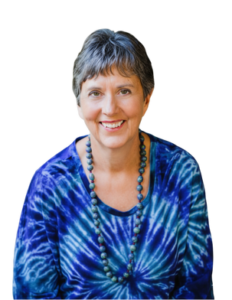
Clients overwhelmed by stress, trauma, and life's inevitable crises - and therapists seeking to understand how neuroscience can enhance therapeutic healing - may need more than traditional approaches to build genuine resilience that lasts beyond the therapy room. Linda Graham has spent almost 30 years pioneering the integration of neuroscience, mindfulness, and relational psychology, becoming one of the world's leading authorities on the neuroscience of resilience and helping thousands of practitioners understand how to literally rewire the brain for greater well-being.
As a Licensed Marriage and Family Therapist in the San Francisco Bay Area since 1995 and award-winning author of Bouncing Back: Rewiring Your Brain for Maximum Resilience and Well-Being, Graham represents the perfect synthesis of clinical expertise and cutting-edge research. Her Books for a Better Life Award (2013) and Better Books for a Better World Award (2014) reflect her exceptional ability to translate complex neuroscientific concepts into immediately applicable practices. Her timing was "blessed," as she puts it, to help pioneer the clinical interest in resilience neuroscience, training thousands of practitioners across the United States, Canada, Europe, Australia, and the Middle East in evidence-based approaches to building authentic resilience.
Graham's expertise spans the neuroscience of resilience, stress and trauma recovery, anxiety and depression management, mindfulness, self-compassion, somatic psychology, couples therapy, and contemplative practices integration. Her approach integrates modern neuroscience with ancient contemplative wisdom, recognising that true resilience isn't about bouncing back to where we were, but about bouncing forward to who we can become. She specialises in helping clients shift from reactive patterns to response flexibility, transforming "regrettable moments into teachable moments," and developing what she calls the four intelligences: somatic, emotional, relational, and reflective.
What sets her training apart is scientific rigor combined with contemplative wisdom. Graham doesn't just teach resilience techniques - she shows practitioners how specific practices literally rewire neural pathways to strengthen capacities for coping, connection, and conscious choice-making. Her integration of Eastern contemplative practices with Western psychology and neuroscience provides a comprehensive framework for sustainable therapeutic change.
For your practice, expect to gain exposure to up to 80 experiential exercises for building resilience, specific neuroscience-based interventions for stress and trauma, and frameworks for integrating mindfulness and self-compassion into existing therapeutic approaches. Her methods particularly benefit clinicians working with trauma survivors, those interested in mindfulness-based interventions, or practitioners seeking to understand how therapy creates lasting neuroplastic change.
Quick Win: Using the DBT "STOP" technique (Stop, Take a breath, Observe what's happening, Proceed mindfully) helps clients quickly shift from reactive to responsive mode - helping provide instant emotional regulation while building the neural pathways that support long-term resilience.
Qualifications
- Master's Degree, Clinical Psychology and Marriage and Family Therapy, John F. Kennedy University, Orinda, CA
- Licensed Marriage and Family Therapist (MFT), California, since 1995
- Advanced training: AEDP, DBT, EMDR, EFT for couples, Sensorimotor Psychotherapy, Internal Family Systems, Interpersonal Neurobiology, Mindful Self-Compassion protocol
- 30+ years clinical experience
Authored Books
- Resilience: Powerful Practices for Bouncing Back from Disappointment, Difficulty, and Even Disaster (2018)
- Bouncing Back: Rewiring Your Brain for Maximum Resilience and Well-Being (2013, over 80 experiential exercises, award-winning)
Professional Experience
- Author & International Speaker, Resilience and Neuroscience, 2013–present
- Licensed Marriage and Family Therapist, Private Practice, San Francisco Bay Area, 1995–2023
- Clinical Training Provider, Neuroscience of resilience workshops, USA, Canada, Europe, Australia, Middle East, 2013–present
Publications & Media
- Weekly "Resources for Recovering Resilience" newsletter, 2008–2023 (archived at website)
- Regular contributor: The Psychotherapy Networker, Mindful magazine, Wise Brain Bulletin, Greater Good Science Center newsletters
- Podcast guest: The Adult Chair, One You Feed, numerous resilience and mental health podcasts
- Featured expert on resilience and mindfulness topics
Clinical Specialties
- Neuroscience of resilience and post-traumatic growth
- Stress and trauma recovery using neuroplasticity principles
- Integration of mindfulness and self-compassion in therapy
- Couples therapy with attachment-based and mindfulness approaches
- Anxiety and depression management through resilience building
- Somatic approaches to emotional regulation
- Response flexibility and perspective-shifting techniques
Teaching Focus
- Integration of modern neuroscience with contemplative wisdom
- Four intelligences: somatic, emotional, relational, and reflective
- Transforming "regrettable moments into teachable moments"
- Building authentic resilience beyond mere bouncing back
- Conscious, compassionate connection as foundation for healing
Ready to help clients build genuine resilience that creates lasting neuroplastic change? Discover how Linda Graham's evidence-based, contemplatively-informed methods can transform your understanding of how therapy rewires the brain for authentic well-being and post-traumatic growth.
Feedback & Reviews
This course includes:
- Lessons 2
- Topics 6
- Duration 4 hours
- Quizzes 1
- Language English