

Gaslighting: Helping your Client Survive Hidden Manipulation
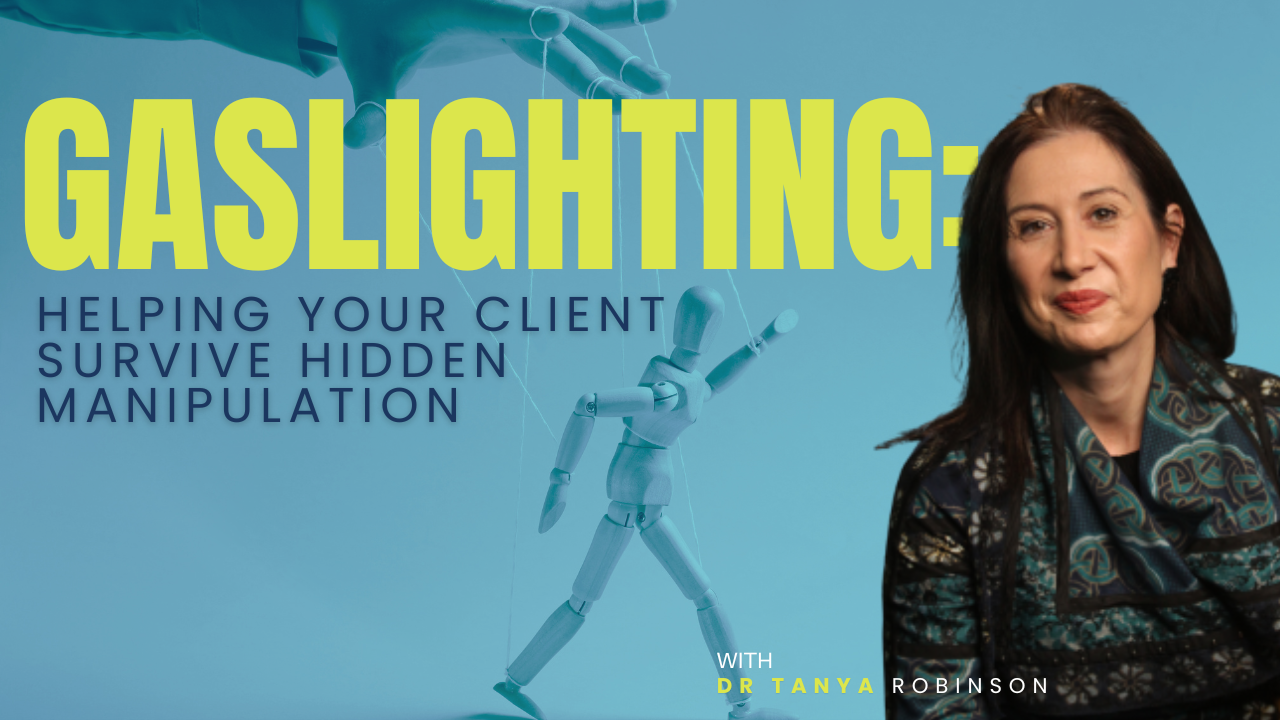
A gaslighter who has been doing this a long time does not only work on the person in front of them. They research. They go and find the best practitioner, the most qualified solicitor, and they use them, because a credible professional who has taken their account at face value is a far more effective weapon than anything they could do themselves. Tanya Robinson calls the people recruited this way flying monkeys, and she has watched it happen from both sides.
She is a forensic mental health social worker who spent years in correctional services and forensic assessment before moving into practice in Adelaide. Highly manipulative people with complex personalities were the work, not an occasional presentation, and it shows in what she chooses to cover. Most gaslighting training teaches you to recognise it in a client’s relationship. This one does that and then keeps going, into the therapy room itself.
Five hours across eight sessions. The tactics named and worked through: triangulation, splitting, projection, the double bind, love bombing and the discard cycle, narcissistic rage, bait and switch. Early warning signs in a new relationship. Why people stay, including trauma bonding and Stockholm syndrome. Then the settings, which is where the range shows: intimate relationships and divorce, families, workplaces, universities, cults and extremist groups, public life and media, and human trafficking, which she has worked in directly. Throughout there are protective strategies you can teach, a section on what healthy behaviour looks like for a client who has never had a model of it, and a frank piece on what to do when your treatment is not working.
You’ll walk away with
- The tactics named and recognisable: triangulation, splitting, projection, the double bind, bait and switch, narcissistic rage
- Early warning signs in the first stages of a relationship, before the pattern is established
- Love bombing, devaluation and discard, and the cycle a client is usually somewhere inside
- Why people stay, including trauma bonding and Stockholm syndrome
- Protective strategies you can teach a client, including how to structure contact they cannot avoid
- How gaslighters recruit third parties, including therapists and lawyers, and how to notice you are being used
- Practitioners gaslighted by their own clients, which she says she sees regularly in supervision
- Gaslighting in the workplace, including harassment by clients and what your options actually are
- The same dynamics in families, divorce, universities, cults and human trafficking
- What healthy behaviour looks like, for clients who have had no model of it
- Adapting your counselling style for this work, and what to do when the treatment is not moving
Watch the course trailer
CPD Information For Mental Health Professionals
Enjoy complete flexibility with 100% self-paced learning you can access anytime, anywhere, and on any device. This course is included with your Tatra Training membership, along with every other course in the library.
Where this sits: the practitioner-facing course on gaslighting, covering the forensic, workplace and institutional settings alongside intimate relationships. Ross Rosenberg’s Gaslighting Is Everywhere approaches the same subject through narcissistic abuse in relationships, and the two barely overlap.
Included: a handout and supporting literature.
Course Duration: 5 learning hours
Certificate and CPD hours: On completion you’ll receive a Certificate of Completion to support your CPD records. Your certificates are yours to keep.
Assessment: Complete a short quiz at the end (80% pass mark), which you can resit as many times as needed.
Revisit Anytime: Come back to the course as often as you like while your membership is active, whenever you want a refresher for practice.
CPD Eligibility: This program may be suitable for CPD for professionals such as:
- Psychologists
- Counsellors and Psychotherapists
- Social Workers
- Community Workers
- Mental Health Nurses
- General Practitioners (GPs)
- Occupational Therapists
CPD requirements vary between professional bodies, so please check with your association or credentialing body to confirm you can claim CPD hours/OPD points for this program and what evidence they require.
Program Overview:
- What is gaslighting
- Different types of gaslighting
- Triangulation
- Splitting
- Blatant attempts to carry favour
- Projection and using disclosure as psychological ammunition
- Double bind
- “Flying Monkeys”
- Narcissistic rages
- Bait and Switch
- Gaslighting in intimate relationships: Love-bombed, Hoovered, Devalued and Discarded
- Warning Signs in the Early Stages of the Relationships
- Why gaslighters behave this way?
- Strategies controlling people use
- Why do people stay with gaslighters?
- Protective Strategies: Helping Clients in the Complex Situations
- Understand how healthy people behave
- Saboteurs, Harassers, Off-Loaders and Thunder Stealers
- Bullying and Harassment in the Workplace
- Workplace Violence
- Harassment by Clients
- Harassment at University
- Domestic Violence
- Trauma bonding and Stockholm Syndrome
- Common Characteristics of Gaslighters in the Public Sphere
- Gaslighting Leaders
- Gaslighting Media
- Gaslighting in Social Media
- Cults
- Gaslighters in the Inner Circle of Trust
- Gaslighters in Your Family
- Adapting Your Counselling Style
- What to do if your treatment does not work.
Course Content
Meet Your Instructor
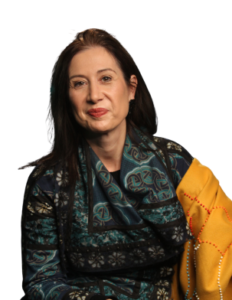
Professor Tanya Robinson is a forensic mental health social worker specialising in forensic mental health, complex mental health presentations, trauma, and legal systems.
She has over 25 years of experience working with children, adults, and families presenting with complex mental health difficulties, trauma histories, and involvement in forensic and legal contexts. Her work is grounded in a biopsychosocial-legal framework, integrating clinical practice with an understanding of how mental health presentations interact with legal processes.
Professor Robinson holds four doctoral degrees in Social Work and Criminal Justice, with her academic work focusing on forensic assessment, trauma, and the role of expert evidence in legal proceedings. This foundation informs her work in providing independent, evidence-based opinions in complex matters requiring clinical insight that is both therapeutically informed and legally robust.
She has specialised expertise in psychotraumatology and victimology, working with individuals who present with post-traumatic stress disorder (PTSD), complex PTSD (CPTSD), intergenerational trauma, and the long-term impacts of abuse, violence, and systemic adversity. She also maintains a special interest in neuroscience, trauma, and mental health, particularly in understanding how trauma affects brain development, emotional regulation, and behaviour across the lifespan.
Her clinical approach recognises trauma as a multilayered and enduring experience, influencing emotional regulation, identity, relational functioning, and neurobiological development across the lifespan.
Her work includes biopsychosocial-legal assessments and expert testimony across family and criminal jurisdictions, particularly in cases involving trauma, abuse, domestic violence, and high-conflict dynamics. She is regularly engaged in matters requiring careful differentiation between clinical presentation, contextual factors, and evidentiary considerations.
Professor Robinson has worked extensively in challenging and high-risk environments, including courts, justice systems, and custodial settings. Her experience includes work within African prison environments, gang-affected communities, and international contexts characterised by violence and systemic adversity, as well as engagement in commercial sex industry settings and involvement in high-profile sexual offence matters, including cases involving femicide and filicide. These experiences have informed a practice grounded in resilience, adaptability, and the capacity to engage with complex human behaviour under pressure, while maintaining professional objectivity and clinical integrity.
Clinically, she works across children and adult mental health presentations, including anxiety, depression, attachment disturbances, personality vulnerabilities, dissociation, and neurodivergence. Her therapeutic work integrates Schema Therapy, psychodynamic psychotherapy, EMDR, and trauma-informed practice, tailored to the complexity of each individual presentation.
A key focus of her work is the impact of intergenerational trauma, where patterns of distress, attachment disruption, and coping responses are transmitted across family systems. Her approach considers both the individual experience of trauma and the broader systemic context in which it develops and is maintained.
Professor Robinson's practice reflects a consistent focus on structured assessment, clinical clarity, and careful formulation, ensuring that her work remains both clinically sound and appropriate within forensic and legal settings.
What distinguishes her training and professional contribution is the integration of extensive frontline forensic experience with advanced academic scholarship. Her work demonstrates how clinicians can effectively operate across clinical, forensic, and legal environments, applying structured assessment methods, trauma-informed frameworks, and evidence-based approaches in complex and high-risk cases.
Education
- Doctor of Philosophy (PhD), Criminal Justice, University of South Africa (2017–2021)
An explorative study on the importance of credible expert witness testimony in violent crimes against children - Doctor of Philosophy (PhD), Social Work, University of Cape Town (2012–2015)
An explorative study of false allegations of child sexual abuse in divorce and custody proceedings - Doctor of Philosophy (PhD), Social Work, North-West University (2006–2011)
Development of substantive guidelines for parenting plans (legal instruments and policy) - Doctor of Philosophy (DPhil), Social Work, Stellenbosch University (2003–2005)
Critical assessment of experiences and perceptions of couples in unconsummated marriages - Master's Degree, Social Work
- Bachelor of Arts & Social Work (BA SW) – Double major in Psychology and Sociology
- Postgraduate Certificate in Education, University of South Africa
- Graduate Diploma – Family Dispute Resolution (FDR) – Registered FDR Practitioner (F2003645)
- Accredited Mediator, Mediation Institute – NMAS Member 218
- Postgraduate Certificate – Investigative Interviewing of Children, Griffith University, Australia
Publications
- The Symbol of No Escape (2016)
- The Silenced Child (2015)
- Divorce: What About the Children? (2009)
- The Couple in an Unconsummated Marriage (2010)
- When Sex Turns Sour (2005)
- False Allegations of Child Sexual Abuse in Divorce Proceedings (2016)
- Mental Health and Legal Professionals Structuring Parenting Plans (2012)
- A Christian Ethos in South African Public Schools: The Child's Voice (2017)
- Sexuality and HIV Education – Sexually Related Social Issues (2016)
- Legal Instruments in Structuring Parenting Plans (2011)
- Professional Views of Mental Health and Legal Professionals Relating to the Divorcing Family (2018)
- Parenting Plans Attentive to the Needs of the Divorcing Family (2018)
Academic & Research Positions
- Honorary Fellow, University of KwaZulu-Natal, School of Applied Human Sciences (2020)
- Extraordinary Professor, North-West University, Faculty of Health Sciences (2017–present)
- Academic Research Fellow, University of South Africa, Department of Criminal Justice (2016–2019)
Professional Experience & Leadership
- Principal, Practice of Prof Tanya M Robinson (South Australia)
- Forensic Mental Health Consultant, maximum security facilities (South Africa)
- Research Director, gender-based violence projects (Africa)
- Activist, counter-trafficking and human rights initiatives
- Expert Witness in Court proceedings
- Podcast Host, Case Files: The Human Factor (2024–present)
- Ambassador, Teddy Bear Foundation
Clinical Specialties
- Complex trauma treatment (PTSD, CPTSD, developmental trauma)
- Psychodynamic psychotherapy (children and adults)
- Forensic mental health assessments
- Family law assessments and child impact reports
- Sexual abuse and domestic violence intervention
- Human trafficking assessment and recovery
- Victimology and criminal biopsychosocial applications
- Play therapy and EMDR integration
Forensic Expertise
- Court-appointed expert in family and criminal matters
- Biopsychosocial-legal assessments
- International custody case evaluations
- Child witness preparation and protection
- Criminal biopsychosocial consultations
- Expert testimony in complex abuse cases
Feedback & Reviews
This course includes:
- Lessons 9
- Topics 0
- Duration 5 hours
- Quizzes 1
- Language English