

Hoarding: An Overview of Treatment and Assessment

While hoarding is not a new problem, it has finally achieved the status of becoming its own diagnosable condition.
Hoarding can have significant impacts on people’s lives, from the personal distress that the hoarding can cause to family discord and even health concerns on those in the home due to mould and infestation.
Hoarding can be dangerous if there is a shift of items that traps someone or if there is a fire in the home. In fact, a study out of Melbourne found that hoarding homes account for less than 1% of all house fires, but 24% of house fire fatalities (WPI).
Interventions for individuals who hoard have to involve numerous facets for successful treatment. There has to be assessment or acquiring, saving, and discarding/disorganization behaviors. There must be attention paid to executive functioning, decision making, and ADHD symptoms. Further, the items themselves have to be looked at for sentimental (emotion), instrumental (useful), and intrinsic (beauty) value.
In this course we will review the basics of hoarding, the influences of acquiring and saving and disorganization, and the value that is placed on items. Further, areas of focus, such as attention, decision making, and executive functioning will be reviewed. Case examples will be discussed from the presenter’s personal cases, as well as his cases from the show, Hoarding: Buried Alive.
Those partaking in this course will:
- Learn how Hoarding is defined in the DSM-5 and is no longer considered a subset of OCD, but it’s own diagnosis.
- Learn how to apply the basics of CBT for Hoarding to cases that are referred to them, including assessing areas such as executive functioning, attention, and decision making.
- Learn how to approach working with individuals who hoard to clean out their living space in a way that is humane and honoring of their possessions.
CPD Information For Mental Health Professionals
Enjoy complete flexibility with 100% self-paced learning you can access anytime, anywhere, and on any device. Pay once for lifetime access.
Course Duration: 3 learning hours
Certificate and CPD hours: On completion you’ll receive a Certificate of Completion to support your CPD records.
Assessment: Complete a short quiz at the end (80% pass mark), which you can resit as many times as needed.
Lifetime Access: Your access to the course does not expire, so you can revisit key concepts anytime you want a refresher for practice.
CPD Eligibility: This program may be suitable for CPD for professionals such as:
- Psychologists
- Counsellors and Psychotherapists
- Social Workers
- Community Workers
- Mental Health Nurses
- General Practitioners (GPs)
- Occupational Therapists
CPD requirements vary between professional bodies, so please check with your association or credentialing body to confirm you can claim CPD hours/OPD points for this program and what evidence they require.

Course Content
Meet Your Instructor
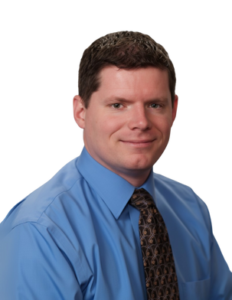
Individuals with OCD whose lives have been hijacked by intrusive thoughts and compulsions - and the families watching helplessly as their loved ones disappear behind anxiety-driven rituals - can need more than generic anxiety treatment to break free from what Dr. McGrath calls "the most selfish disorder in the world." Patrick McGrath has dedicated over 20 years to mastering Exposure and Response Prevention (ERP) therapy, becoming one of the world's leading OCD specialists and helping thousands of clients reclaim their lives through evidence-based treatment that works.
As Chief Clinical Officer for NOCD, the world's leading provider of virtual OCD therapy, and Lead Psychologist at Ascension Illinois Alexian Brothers Behavioral Health Hospital, Dr. McGrath brings unparalleled expertise in treating the full spectrum of OCD presentations. His Fellowship with the Association for Behavioral and Cognitive Therapies, membership on the Scientific and Clinical Advisory Boards of the International OCD Foundation, and role as Past President of OCD Midwest demonstrate his leadership in advancing OCD treatment. His books Don't Try Harder, Try Different (recipient of the Self Help Award of Merit from ABCT) and The OCD Answer Book have become essential resources for both practitioners and families navigating OCD recovery.
Dr. McGrath's expertise spans Obsessive-Compulsive Disorder, OCD-related disorders, Exposure and Response Prevention (ERP) therapy, anxiety disorders, school refusal, Body-Focused Repetitive Behaviors (BFRBs), and what he describes as helping families "get their loved ones back" from OCD. His approach recognises that effective OCD treatment requires specialised knowledge - generic CBT techniques can fail with OCD because they don't address the unique ways OCD hijacks normal thinking patterns. He specialises in severe and treatment-resistant OCD cases, helping clients who have struggled for years without success, and training other clinicians to deliver high-quality ERP therapy.
What sets his training apart is specialised expertise combined with compassionate understanding. McGrath doesn't just teach ERP techniques - he shows practitioners how to understand the specific ways OCD operates differently from other anxiety disorders and why standard anxiety treatments can make OCD worse. His journey from "neighborhood therapist" (helping friends' problems via phone in college) to world-renowned specialist reflects his deep personal commitment to this work.
For your practice, expect to gain specific ERP protocols for different OCD presentations, tools for working with families affected by OCD, and frameworks for distinguishing OCD from other anxiety disorders. His approach particularly benefits clinicians wanting to develop OCD specialisation, those working with treatment-resistant anxiety cases, or practitioners seeking to understand why traditional CBT approaches fail with OCD clients.
Quick Win: McGrath's "OCD vs. Anxiety distinction" framework helps practitioners identify when intrusive thoughts indicate OCD rather than generalised anxiety - potentially preventing months of ineffective treatment and enabling targeted ERP interventions that can create sustained improvement.
Qualifications
- Ph.D., Clinical Psychology, Northern Illinois University
- M.A., Clinical Psychology, Mississippi State University
- B.A., Psychology, University of Illinois
- Postdoctoral Fellowship, St. Louis Behavioral Medicine Institute, Saint Louis University, 1999–2001 (Mentor: Dr. C. Alec Pollard)
- Licensed Clinical Psychologist: Michigan, Illinois, Missouri
- Over 20 years OCD treatment experience
Authored Books
- Don't Try Harder, Try Different (stress management workbook, winner of the ABCT Self Help Book Merit Award)
- The OCD Answer Book (comprehensive OCD resource guide)
- Over 15 publications in peer-reviewed articles and professional publications
Professional Experience
- Lead Psychologist, Ascension Illinois Alexian Brothers Behavioral Health Hospital
- Assistant Vice President of Residential Services, AMITA Health Behavioral Medicine Institute
- Executive Director, Foglia Family Foundation Residential Treatment Center
- Clinical Director, Center for Anxiety and OCD, AMITA Health
- Clinical Director, School Anxiety/School Refusal Programs, AMITA Health
Training & Speaking
- Over 900+ talks and conference presentations throughout career
- International trainer for CBT, ERP, and Anxiety Disorders in USA, Australia, Turkey, and Italy
- Featured on Discovery Health Channel's documentary "Panic"
- Featured on three episodes of "Hoarding: Buried Alive" (TLC)
- Featured on National Public Radio and PBS
- Radio and TV appearances across the country
Clinical Specialties
- Obsessive-Compulsive Disorder (OCD) and OCD-related disorders
- Exposure and Response Prevention (ERP) therapy
- Treatment-resistant OCD and severe presentations
- School refusal and school anxiety disorders
- Body-Focused Repetitive Behaviors (BFRBs)
- Anxiety disorders, PTSD, and traumatic stress responses
- Co-occurring disorders (anxiety and addiction)
- Intensive treatment programs (partial hospital, residential)
Ready to become an effective OCD specialist and help clients break free from the tyranny of intrusive thoughts and compulsions? Discover how Dr. McGrath's specialised ERP methods can transform your understanding of OCD treatment and give you the specific tools needed to help clients reclaim their lives from this "most selfish disorder."
Feedback & Reviews
This course includes:
- Lessons 1
- Topics 2
- Duration 3 hours
- Quizzes 1
- Language English