Integrating Polyvagal Theory Into Practice: Clinical Strategies and Techniques

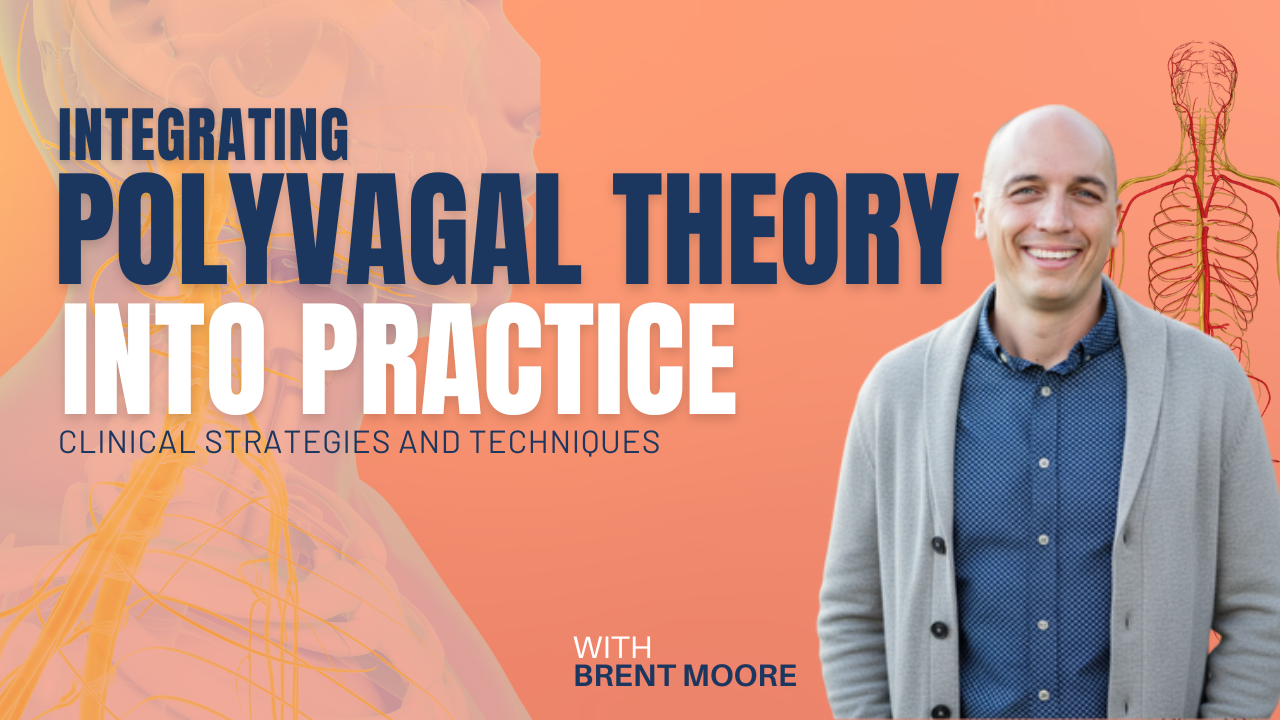
Polyvagal theory, developed by Stephen Porges, provides a framework to understand how activation of the vagus nerve serves to trigger the calming response of our nervous system in more nuanced ways than previously understood.
This calming response is crucial in balancing our sympathetic (i.e. active) response, which is often overactive in clients experiencing various forms of chronic psychological distress. Now, through Polyvagal theory, we are introduced to a third part of our nervous system (in addition to the classic “fight-or-flight” and “rest and digest” parts) Porges calls the “social engagement” system. The ventral branch of the vagus nerve operating above the diaphragm is thought to serve this “social engagement” system that essentially provides for nuanced modulation and activation of the sympathetic and parasympathetic systems through interaction with others (i.e. coregulation) in a way that cultivates a sense of safety and allows for more flexible coping styles and ultimately better relationship experiences.
Learn how these systems work and how to employ this cutting edge theory into practice. Help your most stuck or overactive clients feel safe, shift into their social engagement biology, and achieve nervous system regulation through embodiment and connection with others.
Learning Objectives:
This training will provide participants clinical knowledge and tools to:
- List three organizing principles of polyvagal theory.
- Describe the autonomic hierarchy.
- Explain at least two processes involved with co-regulation.
- Identify treatment strategies that target presenting client concerns.
- Apply and practice therapeutic techniques that foster safety and connection.
CPD Information For Mental Health Professionals
Enjoy complete flexibility with 100% self-paced learning you can access anytime, anywhere, and on any device. Pay once for lifetime access.
Course Duration: 2.5 learning hours
Certificate and CPD hours: On completion you’ll receive a Certificate of Completion to support your CPD records.
Assessment: Complete a short quiz at the end (80% pass mark), which you can resit as many times as needed.
Lifetime Access: Your access to the course does not expire, so you can revisit key concepts anytime you want a refresher for practice.
CPD Eligibility: This program may be suitable for CPD for professionals such as:
- Psychologists
- Counsellors and Psychotherapists
- Social Workers
- Community Workers
- Mental Health Nurses
- General Practitioners (GPs)
- Occupational Therapists
CPD requirements vary between professional bodies, so please check with your association or credentialing body to confirm you can claim CPD hours/OPD points for this program and what evidence they require.

Course Content
Meet Your Instructor

Learning struggles that mask emotional pain - or mental health symptoms that hide learning differences - create some of the most challenging cases clinicians face. Brent Moore has spent his career mastering the art of untangling these complex presentations, helping practitioners recognise when academic difficulties and psychological distress are interconnected.
With over 15 years in higher education and clinical practice, Dr. Moore serves as Chair and Professor of Behavioral and Health Sciences at Indiana Wesleyan University while operating Neural Pathways Learning Center, his specialised clinic for learning disability assessment in Liberty, Missouri. His recognition as the 2024 Dr. Linda Seligman Counselor Educator of the Year by the American Mental Health Counselors Association reflects his excellence in preparing the next generation of clinicians to address complex cases involving anxiety, ADHD, and learning differences.
Moore's clinical focus spans educational diagnostics, play therapy, health psychology, and clinical mental health counseling, with particular expertise in learning disabilities that co-occur with anxiety and attention issues. As a Registered Play Therapist Supervisor and Licensed Professional Counselor in multiple states, he bridges the gap between educational assessment and therapeutic intervention. His approach helps clinicians recognise when academic struggles mask underlying emotional issues - and when learning differences complicate traditional mental health treatment.
What sets his training apart is practical integration. Moore doesn't just teach assessment or therapy in isolation - he shows practitioners how to weave together educational testing, play-based interventions, and evidence-based counseling to create comprehensive treatment plans. His work with diverse populations, from children with dyslexia to adults navigating career transitions, gives him real-world insights that inform his teaching.
For your practice, expect to gain specific skills in identifying learning differences that impact mental health, practical play therapy techniques for various age groups, and assessment tools that reveal the full picture of client functioning. His methods particularly benefit clinicians working with clients whose presenting concerns may have underlying educational or cognitive components.
Quick Win: Moore's integrated assessment approach helps clinicians distinguish between anxiety that causes academic problems and learning disabilities that create anxiety - a crucial differential that transforms treatment planning and outcomes.
Qualifications
- Ph.D., Health Psychology, Walden University, 2010
- Ed.S., Educational Diagnostician, Northwest Missouri State University, 2023
- MBA, Business Administration, Indiana Wesleyan University, 2022
- M.A., Biblical and Theological Studies, Belhaven University, 2022
- M.A., Clinical Psychology, Wheaton College, 2003
- B.A., Psychology and Theology, MidAmerica Nazarene University, 2000
- Licensed Professional Counselor & Supervisor (Missouri)
- Licensed Clinical Professional Counselor & Supervisor (Kansas)
- Registered Play Therapist Supervisor (RPT-S)
- Board Certified Coach (BCC)
Teaching & Roles
- Chair & Professor, Behavioral and Health Sciences Division, Indiana Wesleyan University, 2023 - present
- Owner, Neural Pathways Learning Center, Liberty, MO, 2021- present
- Adjunct Faculty, California Baptist University, 2022 - present
- Associate Professor, Counselor Education, MidAmerica Nazarene University, 2012 - 2017
Featured & Recognition
- Podcast guest on Broken Beautiful Me, "Finding Light in Loss" (2025)
- Writer, Dystinct Magazine (2022)
- Presenter, British Psychological Society Division of Health Psychology conference, Stirling, Scotland (2024)
- International travel grant recipient to present on AI use at European Society of Psychology Learning and Teaching, Germany
Ready to better serve clients where learning and mental health intersect? Discover how Dr. Moore's integrated approach can enhance your clinical toolkit and improve outcomes for complex cases.
Feedback & Reviews
This course includes:
- Lessons 3
- Topics 0
- Duration 2.5 hours
- Quizzes 1
- Language English