

Pathological Narcissists: Who They Are & What to Do About Them + The Observe Don’t Absorb Technique
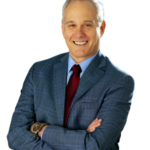

Ross Rosenberg has been careful about this for years. He did not want to be an expert on narcissists. He wanted to be an expert on helping the people narcissists damage, and he notes drily that he went to therapy to make sure he was not one himself. Then he started a YouTube channel to promote a book, watched which videos people actually wanted, and found that every narcissism video outperformed everything else. One in particular, on the technique he uses to avoid being drawn into a fight, outstripped the lot. So he wrote the training people were asking for.
This is it, and it does two jobs. The first five hours are the clinical picture: pathological narcissism as overlapping territory across narcissistic, borderline and antisocial presentations, including the covert form that gets missed and the malignant form that does not. How these individuals manipulate, control and dominate, and why. Where it comes from developmentally. What narcissistic abuse syndrome actually consists of.
The last part is the practical answer, the Observe Don’t Absorb technique, taught in the context of everything preceding it. He is also willing to ask a question most courses on this subject avoid, which is whether most therapists should be working with pathological narcissists at all. Two guest speakers appear, both authors writing from experience: one on a relationship with a sociopath, one on growing up with a malignant narcissistic father.
You’ll walk away with
- Pathological narcissism deconstructed across NPD, BPD and antisocial presentations, plus where addictions fit
- Covert narcissism, which presents nothing like the stereotype and is routinely missed
- Malignant narcissism, and where it sits on his continuum
- Narcissistic abuse syndrome as a pattern, distinguished from the human magnet dynamic
- Gaslighting and Stockholm syndrome as they appear inside these relationships
- The developmental origins, including attachment trauma and how narcissistic personality forms
- Hoovering, and why a client’s no-contact decision keeps collapsing
- The many faces of a narcissistic injury, and what happens in the aftermath of one
- Narcissism in old age and in dying, which almost nothing else covers
- When taking the mask off is dangerous for the client, and why exposure is not always the goal
- The Observe Don’t Absorb technique in full, including the fantasy defence techniques and predictive awareness
- Building a narcometer, his term for a client’s internal early warning system
- An honest discussion of whether most therapists should work with pathological narcissists at all
- Two first-hand accounts from authors who lived it, as a counterpoint to the clinical material
Watch the course trailer
CPD Information For Mental Health Professionals
Enjoy complete flexibility with 100% self-paced learning you can access anytime, anywhere, and on any device. This course is included with your Tatra Training membership, along with every other course in the library.
Where this sits: this is the full course, covering the clinical picture of pathological narcissism and then the Observe Don’t Absorb technique. A separate one-hour course teaches the technique on its own, without the surrounding material.
Course Duration: 6 learning hours
Certificate and CPD hours: On completion you’ll receive a Certificate of Completion to support your CPD records. Your certificates are yours to keep.
Assessment: Complete a short quiz at the end (80% pass mark), which you can resit as many times as needed.
Revisit Anytime: Come back to the course as often as you like while your membership is active, whenever you want a refresher for practice.
CPD Eligibility: This program may be suitable for CPD for professionals such as:
- Psychologists
- Counsellors and Psychotherapists
- Social Workers
- Community Workers
- Mental Health Nurses
- General Practitioners (GPs)
- Occupational Therapists
CPD requirements vary between professional bodies, so please check with your association or credentialing body to confirm you can claim CPD hours/OPD points for this program and what evidence they require.
Course Content
Meet Your Instructor

Individuals trapped in destructive relationships with narcissists - and the practitioners trying to help them break free from what seems like magnetic attraction to toxic partners - may need more than traditional codependency treatment to understand and heal the deeper patterns that keep them stuck. Ross Rosenberg has spent over 35 years developing groundbreaking theories about what he calls "The Human Magnet Syndrome," becoming one of the world's leading experts in narcissistic abuse recovery and the pioneer of "Self-Love Deficit Disorder™" as a revolutionary replacement for outdated codependency concepts.
As CEO/Owner of Self-Love Recovery Institute and bestselling author of The Human Magnet Syndrome (200,000+ copies sold in 12 languages, Amazon bestseller since 2013), Rosenberg brings unique expertise that combines clinical excellence with massive global reach. His 34+ million YouTube views, 310,000+ subscribers, and top 2% globally-ranked Self-Love Recovery Podcast demonstrate his exceptional ability to make complex psychological concepts accessible to millions worldwide. His latest work, The Codependency Revolution: Fixing What Was Always Broken, introduces his revolutionary Self-Love Deficit Disorder™ concept, fundamentally reshaping how we understand and treat codependent patterns.
Rosenberg's expertise spans codependency (Self-Love Deficit Disorder™), narcissistic abuse recovery, pathological narcissism, trauma treatment, gaslighting recovery, and what he describes as helping people break free from their "magnetic" attraction to partners who hurt them. His approach recognises that traditional codependency treatment often fails because it doesn't address the deeper self-love deficits that create vulnerability to narcissistic partners. He specialises in helping survivors of narcissistic abuse understand why they repeatedly choose harmful partners, develop the self-love necessary to break these patterns, and recover from the complex trauma that narcissistic relationships create.
What sets his training apart is theoretical innovation combined with authentic vulnerability. Rosenberg doesn't just teach recovery techniques - he shows practitioners and clients how to understand the unconscious "magnetic" dynamics that draw codependent individuals to narcissistic partners. His willingness to share his own recovery journey creates the authentic connection that facilitates deep healing in both professional and personal contexts.
For your practice, expect to gain specific techniques for treating narcissistic abuse trauma, tools for helping clients develop genuine self-love, and frameworks for understanding the complex dynamics that keep people trapped in toxic relationships. His approach particularly benefits practitioners working with domestic abuse survivors, those treating complex trauma presentations, or clinicians wanting to develop expertise in narcissistic abuse recovery.
Quick Win: Rosenberg's "Observe Don't Absorb" technique helps clients to create emotional boundaries with narcissistic partners - sometimes providing the first sense of personal power they've experienced in years while building the foundation for deeper recovery work.
Qualifications
- M.Ed., Counseling Psychology, Boston University, 1988
- B.A., Psychology, Towson University, Maryland, 1987
- Licensed Clinical Professional Counselor (LCPC), Illinois
- Certified Alcohol and Drug Counselor (CADC)
- Certified Sex Addiction Therapist (CSAT)
- 35+ years clinical experience (practicing since 1988)
Authored Books & Publications
- The Codependency Revolution: Fixing What Was Always Broken (2024, introduces Self-Love Deficit Disorder™ concept)
- The Human Magnet Syndrome: The Codependent Narcissist Trap (2018, Morgan James Publishing, complete rewrite)
- The Human Magnet Syndrome: Why We Love People Who Hurt Us (2013, Premier Publishing & Media, 200,000+ copies sold in 12 languages, Amazon bestseller since 2013)
- The Codependency Cure™ (treatment methodology book)
Media & Global Reach
- 34+ million YouTube views with 310,000+ subscribers
- Self-Love Recovery Podcast: Top 2% globally ranked, 245,000+ downloads
- Featured on: ABC Late Night, Fox News, WGN News, UT-San Diego News
- Regular contributor: Huffington Post, PsychCentral.com
- Featured in: Chicago Tribune, Publisher Weekly
- Hundreds of podcast guest appearances
Professional Experience & Leadership
- CEO/Owner, Self-Love Recovery Institute, Pensacola, FL, September 2013–present
- Owner, Clinical Care Consultants, Arlington Heights, IL, 2012–current
- Expert Witness, Narcissistic Abuse cases, current
- Owner, Advanced Clinical Trainers (professional training company)
Clinical Specialties
- Narcissistic abuse recovery and complex trauma treatment
- Self-Love Deficit Disorder™ (codependency) treatment
- Pathological narcissism and personality disorders
- Gaslighting recovery and psychological manipulation
- Sex and love addiction therapy
- Expert witness work in narcissistic abuse cases
Ready to help clients break free from their magnetic attraction to toxic partners and develop genuine self-love? Discover how Ross Rosenberg's revolutionary Self-Love Deficit Disorder™ methods can transform your understanding of codependency while giving you the tools to help survivors of narcissistic abuse create healthy, loving relationships for the first time.
Feedback & Reviews
This course includes:
- Lessons 2
- Topics 7
- Duration 6 hours
- Quizzes 2
- Language English