

Psychopathy: The Dark Core of Personality


Tanya Robinson spent years working with psychopathy inside correctional services, and the observation she keeps returning to is a small one that changes everything. They are game players. And for many of them the game of manipulation becomes more important than whatever the game is nominally about. Where most people are working toward an outcome, the psychopath is often working the process, which is why the behaviour looks irrational until you see what is actually being enjoyed.
She is careful with the subject, and she spends real time pulling apart the assumptions. Most psychopaths are not serial killers, and plenty of violent offenders are not psychopaths. The idea that they feel nothing does not survive contact with the evidence either: many love their family in their own way, and they do suffer over separation, death and their own failures. It is a distinctive way of experiencing, not an absence, and knowing the difference matters when you are sitting across from someone.
Across the course she covers the defining features and diagnostic systems, the Dark Triad and how psychopathy sits alongside narcissism and Machiavellianism, and the assessment instruments, including Hare’s PCL-R with its factors and facets, and the shorter screening tools. Then the link between childhood abuse and later antisocial development. Then female and male presentations separately, because the onset and expression differ and the female version is routinely missed. Then psychosis, homicide and lethal violence, and the successful psychopath who never comes near a court. She closes on case studies, including James Fallon, the neuroscientist who found his own brain scan in the pile. She is also plain that psychopaths are expert gaslighters and that experienced, well-qualified professionals fall for it, which is why boundaries get their own attention.
You’ll walk away with
- The defining features of psychopathy and the diagnostic systems used to identify it
- The assumptions worth dropping, including the serial killer stereotype and the idea that psychopaths feel nothing
- Psychopathy distinguished from antisocial personality disorder and from violent offending generally
- The Dark Triad, and how psychopathy, narcissism and Machiavellianism overlap and differ
- Hare’s PCL-R, its factors and facets, and where the shorter screening instruments fit
- The link between childhood abuse and neglect and later antisocial development
- Female psychopathy: why onset and expression differ, and why it is under-identified
- Male presentations, including the charm, the mimicry and the cycles of cruelty and kindness
- Psychopathic traits as a risk factor for lethal violence, and what that means for assessment
- The successful psychopath, including corporate settings, and why most never come near a court
- Gaslighting by psychopathic clients, and the boundaries that keep an experienced practitioner from being drawn in
- Extended case studies, including Albert Fish and the neuroscientist James Fallon
Watch the course trailer
CPD Information For Mental Health Professionals
Enjoy complete flexibility with 100% self-paced learning you can access anytime, anywhere, and on any device. This course is included with your Tatra Training membership, along with every other course in the library.
Please note: this is a general grounding in psychopathy rather than specialist forensic training. Tanya Robinson says so herself, and she is clear that formal assessment instruments such as the PCL-R are restricted to practitioners qualified to administer them. The course explains how they work; it does not qualify you to use them.
Where this sits: her longest course and the more clinical of her two. Gaslighting: Helping your Client Survive Hidden Manipulation covers the manipulation tactics in more depth and across more settings.
Included: course materials and supporting literature.
Course Duration: 9 learning hours
Certificate and CPD hours: On completion you’ll receive a Certificate of Completion to support your CPD records. Your certificates are yours to keep.
Assessment: Complete a short quiz at the end (80% pass mark), which you can resit as many times as needed.
Revisit Anytime: Come back to the course as often as you like while your membership is active, whenever you want a refresher for practice.
CPD Eligibility: This program may be suitable for CPD for professionals such as:
- Psychologists
- Counsellors and Psychotherapists
- Social Workers
- Community Workers
- Mental Health Nurses
- General Practitioners (GPs)
- Occupational Therapists
CPD requirements vary between professional bodies, so please check with your association or credentialing body to confirm you can claim CPD hours/OPD points for this program and what evidence they require.
Lesson 1 (The Wolf in Sheep’s Clothes Theory):
- discuss why psychopath is a “wolf in sheep’s clothing”.
- list general characteristics and diagnostic features of a psychopath.
- identify diagnostic systems and screening method of psychopathy.
Lesson 2 (Defining Psychopathic Personality and Psychopathy):
- identify psychopathic traits specific to cold heartedness and a callous unconcern for the feeling of others.
- discuss the psychopaths’ shallow emotions, irresponsibility, insincere speech, overconfidence, narrowing of attention, selfishness, inability to plan for the future, emotional pain and violence, source of sadness and self-destruction.
Lesson 3 (The Dark Triad):
- explain the personality traits and characteristics of the Dark Triad (Psychopathy, Machiavellianism, and Narcissism).
- identify sharing qualities between Narcissism, Machiavellianism and Psychopathy.
Lesson 4 (Clinical Criteria – Psychopathy Checklist. Factors and Facets):
- identify the most frequently used and validated diagnostic tool for assessing psychopathy.
- understand the factor structure in the psychopathy checklist (the PCL-R and the PCL:SV).
- explain the four personality dimensions of the Psychopathy Checklist-Revised (PCL-R).
- summarise Hare’s PCL-R items classified according to factors and facets.
- explain the work of Kent Kiehl.
Lesson 5 (The Link: Childhood abuse history and psychotic traits in adult criminal offenders):
- understand the link between early traumatic experiences of abuse/neglect and criminal behaviour.
- explain childhood abuse as a risk factor for the development of externalizing characteristics and disorders including antisocial personality disorder and psychopathy.
Lesson 6 (Female Psychopaths):
- identify that psychopathy has a different progression in men and women regarding both onset and expression.
- explain Forouzan and Cooke’s claims about the differences between the sexes with respect to psychopathy.
- understand that females can be psychopaths and have knowledge on case studies on female psychopaths.
- identify characteristics of female psychopaths and the history of a female psychopath.
Lesson 7 (Male Psychopaths):
- understand the myths around psychopathy and the Hollywood stereotypes.
- explain the weaponized charm of the male psychopath.
- summarise thoughts on the male psychopath being a leader, effortlessly lying, preying on kindness, gaslighting, narcissism, love bombing, characteristics of a chameleon, following cycles of cruelty and kindness, having traumatic pasts, and being empty inside.
- describe case studies on male psychopaths.
Lesson 8 (Psychosis, Psychopathy, and Homicide):
- understand that psychopathy has stood as perhaps the most formidable risk factor for antisocial behaviour, crime, and violence.
- identify that psychopathic traits are a significant risk factor for lethal violence.
- explain psychopathic traits that facilitate horrific crimes and sadistic murders.
Lesson 9 (The successful psychopath):
- have knowledge on a “functional psychopath” and the concept of psychopaths “getting away with murder”.
- explain the corporate psychopath and that not all psychopaths are murderers.
- identify seven characteristics of the modern psychopath.
Lesson 10 (Interesting case studies):
- critically consider the Albert Fish case study.
- explain the work of Neuroscientist James Fallon’s work.
Course Content
Meet Your Instructor
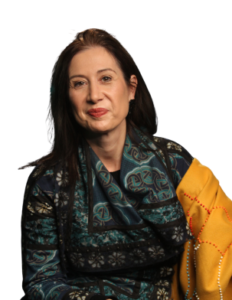
Professor Tanya Robinson is a forensic mental health social worker specialising in forensic mental health, complex mental health presentations, trauma, and legal systems.
She has over 25 years of experience working with children, adults, and families presenting with complex mental health difficulties, trauma histories, and involvement in forensic and legal contexts. Her work is grounded in a biopsychosocial-legal framework, integrating clinical practice with an understanding of how mental health presentations interact with legal processes.
Professor Robinson holds four doctoral degrees in Social Work and Criminal Justice, with her academic work focusing on forensic assessment, trauma, and the role of expert evidence in legal proceedings. This foundation informs her work in providing independent, evidence-based opinions in complex matters requiring clinical insight that is both therapeutically informed and legally robust.
She has specialised expertise in psychotraumatology and victimology, working with individuals who present with post-traumatic stress disorder (PTSD), complex PTSD (CPTSD), intergenerational trauma, and the long-term impacts of abuse, violence, and systemic adversity. She also maintains a special interest in neuroscience, trauma, and mental health, particularly in understanding how trauma affects brain development, emotional regulation, and behaviour across the lifespan.
Her clinical approach recognises trauma as a multilayered and enduring experience, influencing emotional regulation, identity, relational functioning, and neurobiological development across the lifespan.
Her work includes biopsychosocial-legal assessments and expert testimony across family and criminal jurisdictions, particularly in cases involving trauma, abuse, domestic violence, and high-conflict dynamics. She is regularly engaged in matters requiring careful differentiation between clinical presentation, contextual factors, and evidentiary considerations.
Professor Robinson has worked extensively in challenging and high-risk environments, including courts, justice systems, and custodial settings. Her experience includes work within African prison environments, gang-affected communities, and international contexts characterised by violence and systemic adversity, as well as engagement in commercial sex industry settings and involvement in high-profile sexual offence matters, including cases involving femicide and filicide. These experiences have informed a practice grounded in resilience, adaptability, and the capacity to engage with complex human behaviour under pressure, while maintaining professional objectivity and clinical integrity.
Clinically, she works across children and adult mental health presentations, including anxiety, depression, attachment disturbances, personality vulnerabilities, dissociation, and neurodivergence. Her therapeutic work integrates Schema Therapy, psychodynamic psychotherapy, EMDR, and trauma-informed practice, tailored to the complexity of each individual presentation.
A key focus of her work is the impact of intergenerational trauma, where patterns of distress, attachment disruption, and coping responses are transmitted across family systems. Her approach considers both the individual experience of trauma and the broader systemic context in which it develops and is maintained.
Professor Robinson's practice reflects a consistent focus on structured assessment, clinical clarity, and careful formulation, ensuring that her work remains both clinically sound and appropriate within forensic and legal settings.
What distinguishes her training and professional contribution is the integration of extensive frontline forensic experience with advanced academic scholarship. Her work demonstrates how clinicians can effectively operate across clinical, forensic, and legal environments, applying structured assessment methods, trauma-informed frameworks, and evidence-based approaches in complex and high-risk cases.
Education
- Doctor of Philosophy (PhD), Criminal Justice, University of South Africa (2017–2021)
An explorative study on the importance of credible expert witness testimony in violent crimes against children - Doctor of Philosophy (PhD), Social Work, University of Cape Town (2012–2015)
An explorative study of false allegations of child sexual abuse in divorce and custody proceedings - Doctor of Philosophy (PhD), Social Work, North-West University (2006–2011)
Development of substantive guidelines for parenting plans (legal instruments and policy) - Doctor of Philosophy (DPhil), Social Work, Stellenbosch University (2003–2005)
Critical assessment of experiences and perceptions of couples in unconsummated marriages - Master's Degree, Social Work
- Bachelor of Arts & Social Work (BA SW) – Double major in Psychology and Sociology
- Postgraduate Certificate in Education, University of South Africa
- Graduate Diploma – Family Dispute Resolution (FDR) – Registered FDR Practitioner (F2003645)
- Accredited Mediator, Mediation Institute – NMAS Member 218
- Postgraduate Certificate – Investigative Interviewing of Children, Griffith University, Australia
Publications
- The Symbol of No Escape (2016)
- The Silenced Child (2015)
- Divorce: What About the Children? (2009)
- The Couple in an Unconsummated Marriage (2010)
- When Sex Turns Sour (2005)
- False Allegations of Child Sexual Abuse in Divorce Proceedings (2016)
- Mental Health and Legal Professionals Structuring Parenting Plans (2012)
- A Christian Ethos in South African Public Schools: The Child's Voice (2017)
- Sexuality and HIV Education – Sexually Related Social Issues (2016)
- Legal Instruments in Structuring Parenting Plans (2011)
- Professional Views of Mental Health and Legal Professionals Relating to the Divorcing Family (2018)
- Parenting Plans Attentive to the Needs of the Divorcing Family (2018)
Academic & Research Positions
- Honorary Fellow, University of KwaZulu-Natal, School of Applied Human Sciences (2020)
- Extraordinary Professor, North-West University, Faculty of Health Sciences (2017–present)
- Academic Research Fellow, University of South Africa, Department of Criminal Justice (2016–2019)
Professional Experience & Leadership
- Principal, Practice of Prof Tanya M Robinson (South Australia)
- Forensic Mental Health Consultant, maximum security facilities (South Africa)
- Research Director, gender-based violence projects (Africa)
- Activist, counter-trafficking and human rights initiatives
- Expert Witness in Court proceedings
- Podcast Host, Case Files: The Human Factor (2024–present)
- Ambassador, Teddy Bear Foundation
Clinical Specialties
- Complex trauma treatment (PTSD, CPTSD, developmental trauma)
- Psychodynamic psychotherapy (children and adults)
- Forensic mental health assessments
- Family law assessments and child impact reports
- Sexual abuse and domestic violence intervention
- Human trafficking assessment and recovery
- Victimology and criminal biopsychosocial applications
- Play therapy and EMDR integration
Forensic Expertise
- Court-appointed expert in family and criminal matters
- Biopsychosocial-legal assessments
- International custody case evaluations
- Child witness preparation and protection
- Criminal biopsychosocial consultations
- Expert testimony in complex abuse cases
Feedback & Reviews
This course includes:
- Lessons 9
- Topics 0
- Duration 9 hours
- Quizzes 1
- Language English