

Relationship Therapy Toolbox: Effective Empirical Skills to Transform Partnerships


Almost every couple opens with the same sentence. We have communication problems. Corey Petersen has a doctorate in communication as well as a marriage and family therapy licence, and his position is that communication is rarely the actual problem. There are values, beliefs and interests underneath it. What the couple genuinely does not have is a way to talk about a difference without it becoming a fight.
His other starting point reframes the room. In couples work the relationship is the client, not the two people in it. That changes who you are serving when their needs diverge, and it settles a lot of the ethical questions that make clinicians avoid couples work in the first place. He is direct about those: dual loyalties, the line between psychoeducation and imposing your own values, the no-secrets policy, and what to do when a couple arrives in discernment and one of them is not sure they want to stay.
Ten hours across two days. Day one covers the therapist’s role, what communication actually is and what happens when it fails, the underlying dialectics every relationship runs on, conflict management, and building resilience through hard periods. Day two covers boundaries and privacy management, blended families, dyadic coping, intimacy, and fondness and appreciation. He came to psychology from interpersonal communication research, so the theory in here is not what most couples training includes.
You’ll walk away with
- The relationship as the client rather than either partner, and what that changes about how you hold two sets of needs at once
- Content and process separated, so you can tell when the argument is genuinely about the thing and when it is not
- The ethics that keep clinicians out of couples work, covering dual loyalties, value imposition, and the no-secrets policy, with a clear line between psychoeducation and telling a couple what you would do
- Your position when a couple is in discernment, including holding hope for a relationship that still has some in it, and treating ending well as a legitimate outcome rather than a failure
- The dialectics running underneath most recurring arguments, which is why the same fight keeps returning in different clothes
- Conflict management interventions you can run in session, from someone whose caseload was high-conflict couples several days a week
- Dyadic coping and what he calls we-stress: how a couple handles pressure from outside the relationship as a unit rather than as two individuals
- Blended family integration, including what these families do well and where they consistently come unstuck
- Boundaries and privacy management as a couples issue rather than an individual one, including in-laws and disclosure
- Building fondness and appreciation deliberately, which is the work that holds once the conflict has settled
Watch the course trailer
CPD Information For Mental Health Professionals
Enjoy complete flexibility with 100% self-paced learning you can access anytime, anywhere, and on any device. This course is included with your Tatra Training membership, along with every other course in the library.
Course Duration: 10 learning hours
Certificate and CPD hours: On completion you’ll receive a Certificate of Completion to support your CPD records. Your certificates are yours to keep.
Assessment: Complete a short quiz at the end (80% pass mark), which you can resit as many times as needed.
Revisit Anytime: Come back to the course as often as you like while your membership is active, whenever you want a refresher for practice.
CPD Eligibility: This program may be suitable for CPD for professionals such as:
- Psychologists
- Counsellors and Psychotherapists
- Social Workers
- Community Workers
- Mental Health Nurses
- General Practitioners (GPs)
- Occupational Therapists
CPD requirements vary between professional bodies, so please check with your association or credentialing body to confirm you can claim CPD hours/OPD points for this program and what evidence they require.
Course Content
Meet Your Instructor
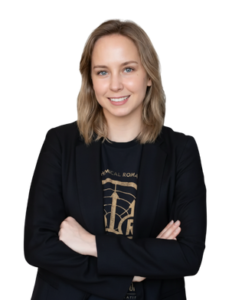
Communication breakdowns that destroy relationships - whether between couples, family members, or in therapeutic settings - often stem from deeper patterns that most practitioners miss. Corey Petersen brings a unique combination of advanced communication research and clinical expertise to help practitioners understand how language shapes therapeutic outcomes and relationship healing.
With a Ph.D. in Communication Studies from the University of Kansas and dual master's degrees in Professional Communication and Marriage and Family Studies, Dr. Petersen represents a rare fusion of academic rigor and clinical practice. His doctoral research on "Finding a Therapist That 'Speaks Your Language'" explores how therapists' communication patterns influence client engagement and treatment success - insights that directly inform his training for mental health professionals. His decade of teaching experience across communication and psychology courses gives him exceptional skill in translating complex concepts into practical applications.
Dr. Petersen's expertise spans couple and family therapy, neurodivergent-affirming approaches, chronic pain and illness, self-harm, anxiety, and cultural humility. His approach combines evidence-based therapeutic interventions with sophisticated understanding of how communication patterns either facilitate or hinder therapeutic progress. He specialises in helping clinicians recognise when their own communication style creates barriers to client connection and provides specific techniques for adapting language to match clients' communication preferences.
What sets his training apart is communication precision. Petersen doesn't just teach therapy techniques - he shows practitioners how the specific words, timing, and delivery of interventions can dramatically alter client responses. His research background gives him evidence-based insights into why certain therapeutic communications succeed while others fail, even with similar content.
For your practice, expect to gain specific skills in therapeutic communication, tools for working with neurodivergent clients, and frameworks for addressing chronic pain and medical challenges in therapy. His methods particularly benefit clinicians who want to improve their therapeutic presence or work more effectively with clients who have communication differences.
Quick Win: Petersen's "communication matching" technique teaches clinicians to identify clients' preferred communication patterns in the first session and adjust their therapeutic language accordingly - often doubling client engagement and treatment compliance.
Qualifications
- Ph.D., Communication Studies, University of Kansas, 2023
- M.S., Marriage and Family Studies, Friends University
- M.A., Professional Communication, Southern Utah University
- B.S., Psychology, Southern Utah University
- B.S., Strategic Communication, Southern Utah University
- Licensed Clinical Marriage & Family Therapist (Kansas)
- Clinical Hypnotherapist
- 10+ years teaching experience in Communication and Psychology
Teaching & Roles
- Owner, Communication and Connection Therapy, Overland Park, KS, 2013–present
- Doctoral Candidate & Graduate Instructor, University of Kansas, 2017–2022
- Academic Coach, Instructional Connections, LLC, 2015–2018
- Adjunct Teacher & Lecturer, Communication and Psychology courses (10 years)
Featured Training
- GoodTherapy webinars: "Ethical Considerations of Therapy Without a Presenting Problem" (2025)
- "Strengthening Relationships in the Face of Medical Challenges" (2024)
- "Navigating Blended Family Dynamics" (2024)
Specialised Expertise
- Communication theory applied to therapeutic practice
- Neurodivergent-affirming therapeutic approaches
- Chronic pain and illness in couple/family systems
- Self-harm assessment and intervention
- Cultural humility in therapeutic relationships
- Organisational communication principles in family therapy
Ready to transform how you communicate with clients? Discover how Dr. Petersen's research-backed communication methods can enhance your therapeutic effectiveness and deepen client connections across diverse populations.
Feedback & Reviews
This course includes:
- Lessons 9
- Topics 0
- Duration 10 hours
- Quizzes 1
- Language English