

Resilience: Strategies for Difficult Times

You already know what to do when a difficult experience turns into post-traumatic stress. Chris Willard’s starting point is that stress is not the most common outcome, that growth is, and that the more useful clinical question is what conditions make growth likelier for the person in front of you.
His second argument is that none of this is private. He opens with refugees in an overcrowded boat, where one person’s panic spreads until the boat capsizes, and one person’s calm spreads and keeps it upright. The research he draws on says something similar about ordinary rooms. When one person in a couple, a classroom, a workplace or a therapy room regulates themselves, the people around them measurably shift. Your own steadiness is not preparation for the work. It is part of the intervention.
Sixteen short modules across three and a half hours, organised around the body, the mind and relationships. The body: sleep, movement, breath and eating, treated as the foundation rather than the afterthought. The mind: what happens to thinking under stress, the mental shortcuts, the negativity bias, and the practices that restore some perspective. Relationships: repair, boundaries, and receiving care as well as giving it. Guided practices run throughout, and he works through unpredictability and helplessness as the two conditions that tip an experience towards stress, with something concrete to put in place against each.
You’ll walk away with
- The two conditions that push an experience towards stress rather than growth, unpredictability and helplessness, and what to put in place against each
- Guided practices you can use in session or set as homework, including a four-part body relaxation and a set of nature-based visualisations
- The research on emotional contagion, and what it means for how you hold yourself in a room before you have said anything
- A way to help a client set an intention for who they want to be on the other side of something, rather than what they hope to achieve during it
- Rituals and routines as a treatment target, including why routine works better than a schedule for most people under stress
- The case for helping others as the intervention for helplessness, shaped around what a client is actually good at rather than generic volunteering
- A clear account of what happens to thinking under stress, and language for naming it with a client who thinks they are losing their grip
- A practice for receiving care, for the client who gives constantly and cannot take anything back
- Practical body work covering sleep, movement, breath and eating, in a form a client will actually attempt
- Your own resilience as a clinician, on the grounds that in most rooms you are where the regulation has to start
Watch the course trailer
CPD Information For Mental Health Professionals
Enjoy complete flexibility with 100% self-paced learning you can access anytime, anywhere, and on any device. This course is included with your Tatra Training membership, along with every other course in the library.
Course Duration: 3.5 learning hours
Certificate and CPD hours: On completion you’ll receive a Certificate of Completion to support your CPD records. Your certificates are yours to keep.
Assessment: Complete a short quiz at the end (80% pass mark), which you can resit as many times as needed.
Revisit Anytime: Come back to the course as often as you like while your membership is active, whenever you want a refresher for practice.
CPD Eligibility: This program may be suitable for CPD for professionals such as:
- Psychologists
- Counsellors and Psychotherapists
- Social Workers
- Community Workers
- Mental Health Nurses
- General Practitioners (GPs)
- Occupational Therapists
CPD requirements vary between professional bodies, so please check with your association or credentialing body to confirm you can claim CPD hours/OPD points for this program and what evidence they require.
Course Content
Meet Your Instructor
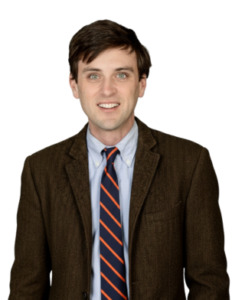
Anxious teens, stressed college students, and overwhelmed families struggling with modern pressures need more than traditional therapy approaches - they need clinicians who understand how mindfulness and other neuroscience backed practices can rewire young brains for resilience. Christopher Willard has dedicated his career to making mindfulness accessible and practical, becoming one of the world's leading experts in mindful approaches to youth mental health.
As a Lecturer on Psychiatry at Harvard Medical School, Dr. Willard has visited and trained practitioners across 44 countries in resilience, mental health, emotional intelligence, communication and more. His 20+ books - including Growing Up Mindful, College Mental Health 101, and the upcoming Neuroscience of Negotiation - have been translated into over a dozen languages and earned praise from mindfulness leaders like Thich Nhat Hanh, Tara Brach, Dan Siegel, and Jack Kornfield. His work bridges ancient wisdom with contemporary neuroscience, showing clinicians how contemplative practices can address anxiety, depression, and stress-related disorders for all ages
Dr. Willard's expertise spans mindfulness-based interventions, developmental neuroscience and corporate and educational consulting. His approach combines 20 years of personal meditation practice with rigorous clinical training, giving him unique insight into resilience across the lifespan. He helps clinicians understand when mindfulness is appropriate, how to adapt practices for different challenges, and ways to integrate contemplative approaches with evidence-based therapies.
What sets his training apart is developmental sophistication and practicality. Willard doesn't just water down mindfulness but make it relevant culturally, cognitively and developmentally for a multitasking world. His work from corporations to clinics to classrooms have shown him what interventions succeed or fail in different settings.
For your practice, expect to gain age-appropriate mindfulness techniques, practical tools for treating anxious and depressed youth, and frameworks for integrating contemplative practices with traditional therapy. His methods particularly benefit clinicians working with adolescents, college students, or families seeking alternatives to medication-focused treatment.
Quick Win: Willard's "Alphabreaths" technique gives young clients 26 different breathing practices they can choose from based on their current emotional state - creating immediate buy-in and personalised coping tools they actually use.
Qualifications
- PsyD, Clinical Psychology, Massachusetts School of Professional Psychology, 2008
- B.A., English, Wesleyan University, 2001
- Licensed Psychologist (Massachusetts)
- 20+ years of personal meditation practice
Authored Books
- College Mental Health 101 (2025, co-author with Blaise Aguirre & Chelsie Green, New Harbinger)
- How We Grow Through What We Go Through (2022, Sounds True)
- Alphabreaths (2019, Sounds True)
- Raising Resilience (2017, Sounds True, praised by Sharon Salzberg, Tina Bryson)
- Growing Up Mindful (2016, Sounds True, praised by Tara Brach, Jack Kornfield)
- Child's Mind (2010, Parallax Press, praised by Thich Nhat Hanh)
- 20+ total titles including therapeutic games and card sets, translated into 10+ languages
Teaching & Roles
- Lecturer on Psychiatry, Harvard Medical School, 2014–present
- Clinical Instructor, Cambridge Health Alliance Department of Psychiatry, 2014–present
- President, Mindfulness in Education Network, 2015–present
- Psychologist & Consultant, Enlightened Livelihoods, 2005–present
- Psychologist, Tufts University Counseling and Mental Health Services, 2009–2014
Speaking & Training
- Harvard Medical School faculty presentations
- Brahm Centre Singapore keynote (2020)
- International mindfulness training and consultation
Ready to help young people develop lifelong resilience skills? Discover how Dr. Willard's mindfulness-based methods can transform your work with anxious and stressed youth while enhancing your own clinical presence.
Feedback & Reviews
This course includes:
- Lessons 2
- Topics 16
- Duration 3.5 hours
- Quizzes 1
- Language English