
Treating Complex Trauma with Trauma-Informed Internal Family Systems

You have a client who has been coming for years. The sessions are warm, they leave feeling better, and nothing changes between one week and the next. Colleen West’s name for this is doing therapy with the porch. The client’s protectors are deciding what gets raised and what gets worked on, you have been talking to them the whole time, and the back rooms of the house have never been opened.
She came to IFS after years as a trauma therapist and EMDR trainer, still holding a group of complex PTSD clients she could not reach. Her position is that IFS is the right model for them and that the standard protocol assumes something these clients cannot yet do, which is access their own Self energy with any consistency. So the course is a half step: what to do when Self is not reliably available, including lending your own until theirs comes online. She is clear that if a client can do straight IFS from the outset, you should just do that.
Six lectures. She puts assessment first, which is unusual in this model, on the grounds that most consultations she does involve a therapist who has read their client as less traumatised than they are and moved too fast. Then the lived experience of trauma and autonomic defence, working with your own parts to find Self, orienting a client to parts language, two kinds of parts mapping, protectors in complex systems, and a final lecture on legacy burdens with preverbal material. There are video demonstrations and a handout with scripts.
You’ll walk away with
- A dissociation spectrum you can place a client on, from the ones who can do inside work immediately, through what she calls the muddy middle, to structural dissociation
- Intuitive assessment you can start on the first phone call, plus her argument for why she does not use the questionnaires and what she reads instead
- Hard and soft signs of dissociation, so you catch the presentation that is easy to mistake for a client who is simply hard to engage
- State change distinguished from systemic change, and why a client leaving every session feeling better can be evidence that nothing is moving
- Lending your own Self energy to a client who cannot yet find theirs, and knowing when to hand the work back rather than keep inserting yourself
- Scaffolding for clients who never built the internal architecture: attuned psychoeducation, externalising parts so the client can see what is happening inside, and direct access
- Protectors as they actually appear in complex trauma, much younger than they look or act, and what changes in the room when you treat the domineering part as a toddler doing a job well above its pay grade
- Suicidal parts understood as protective rather than as risk to be managed away, and the Kitchen Table intervention she uses early with these clients, demonstrated on video with the script provided
- Common polarities in complex systems, including why the two sides both believe they are the reason the client is still alive
- Legacy burdens as a starting point with preverbal material, and why that can be more workable than going at the memory directly
Watch the course trailer
CPD Information For Mental Health Professionals
Enjoy complete flexibility with 100% self-paced learning you can access anytime, anywhere, and on any device. This course is included with your Tatra Training membership, along with every other course in the library.
Course Duration: 6 learning hours
Certificate and CPD hours: On completion you’ll receive a Certificate of Completion to support your CPD records. Your certificates are yours to keep.
Assessment: Complete a short quiz at the end (80% pass mark), which you can resit as many times as needed.
Revisit Anytime: Come back to the course as often as you like while your membership is active, whenever you want a refresher for practice.
CPD Eligibility: This program may be suitable for CPD for professionals such as:
- Psychologists
- Counsellors and Psychotherapists
- Social Workers
- Community Workers
- Mental Health Nurses
- General Practitioners (GPs)
- Occupational Therapists
CPD requirements vary between professional bodies, so please check with your association or credentialing body to confirm you can claim CPD hours/OPD points for this program and what evidence they require.
Course Content
Meet Your Instructor
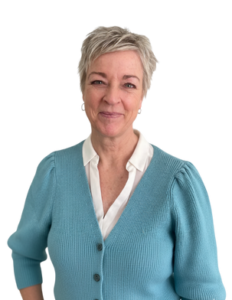
Complex trauma cases that leave clinicians feeling overwhelmed and underprepared often transform when approached through the lens of Internal Family Systems. Colleen West has spent over 20 years specialising in the intersection of trauma and parts work, becoming a recognised expert in helping both clients and clinicians navigate the most challenging presentations with confidence and clarity.
As an IFS Certified Therapist and Approved Consultant, West has dedicated her practice to training clinicians in advanced trauma treatment since founding Smart Therapy Tools in 2015. Her books - including We All Have Parts: An Illustrated Guide to Healing Trauma With Internal Family Systems and The IFS Flip Chart - translate complex therapeutic concepts into accessible tools that clinicians can use immediately. Her training with luminaries like Richard Schwartz, Janina Fisher, and Philip Manfield, combined with extensive study of leading trauma experts including Bessel van der Kolk and Martha Sweezy, gives her comprehensive expertise in treating complex presentations.
West's specialty areas include preverbal trauma, complex trauma, attachment injuries, and the integration of IFS with EMDR and somatic approaches. Her focus on preverbal trauma - the often-overlooked period from conception to age two - helps clinicians understand how early developmental disruptions create lifelong patterns of emotional dysregulation and relational difficulties. She teaches practitioners to recognise when traditional therapy approaches fail because they don't address the parts of clients that formed before language and explicit memory.
What sets her training apart is practical wisdom gained from lived experience. As one of seven daughters from an alcoholic family who experienced significant childhood trauma, West brings authentic understanding to her teaching. She shows clinicians how to work confidently with highly polarised internal systems, thinking protectors, and clients who struggle with standard IFS approaches.
For your practice, expect to gain specific techniques for working with preverbal trauma, tools for helping clients who can't access traditional parts work, and frameworks for managing your own parts when working with complex trauma cases. Her approach particularly benefits clinicians working with clients who have attachment injuries, addiction, or severe emotional dysregulation.
Quick Win: West's "Double Whammy" concept teaches clinicians to recognise that preverbal trauma creates both immense shame and emotional dysregulation - a framework that immediately clarifies treatment priorities and intervention strategies.
Qualifications
- M.A., Counseling Psychology, Holy Names University, Oakland, CA
- B.A., Political Science, University of California San Diego
- Licensed Marriage & Family Therapist, California
- IFS Certified Therapist and Approved Consultant
- Former EMDR Approved Consultant (EMDRIA)
- Additional training in Relational/Depth Psychotherapy, Psychodynamic child and family therapy
Selected Books
- We All Have Parts: An Illustrated Guide to Healing Trauma With Internal Family Systems (2021, Smart Therapy Tools)
- The IFS Flip Chart: A Psychoeducational Tool for Unlocking the Multiple Mind (2023, Smart Therapy Tools)
Teaching & Roles
- Founder & Trainer, Smart Therapy Tools, 2015–present
- IFS Certified Therapist & Approved Consultant, 2005–present
- Individual Consultant for trauma-informed clinicians, 2010–present
- Author & Content Creator, trauma-informed therapy materials, 2018–present
Specialised Training
- Studied with Richard Schwartz (IFS founder), Philip Manfield, Janina Fisher, Chris Burris, Cece Sykes
- Ongoing study of writings by Frank Anderson, Martha Sweezy, Bessel van der Kolk, Patricia Papernow, Michelle Glass
- Integration of IFS, attachment theory, Sensorimotor, and EMDR approaches
Ready to work more confidently with complex trauma and highly activated internal systems? Discover how Colleen West's IFS-based methods can transform your ability to help clients heal from their deepest wounds.
Feedback & Reviews
This course includes:
- Lessons 7
- Topics 0
- Duration 6 hours
- Quizzes 1
- Language English