

Treating Targets of School Bullying
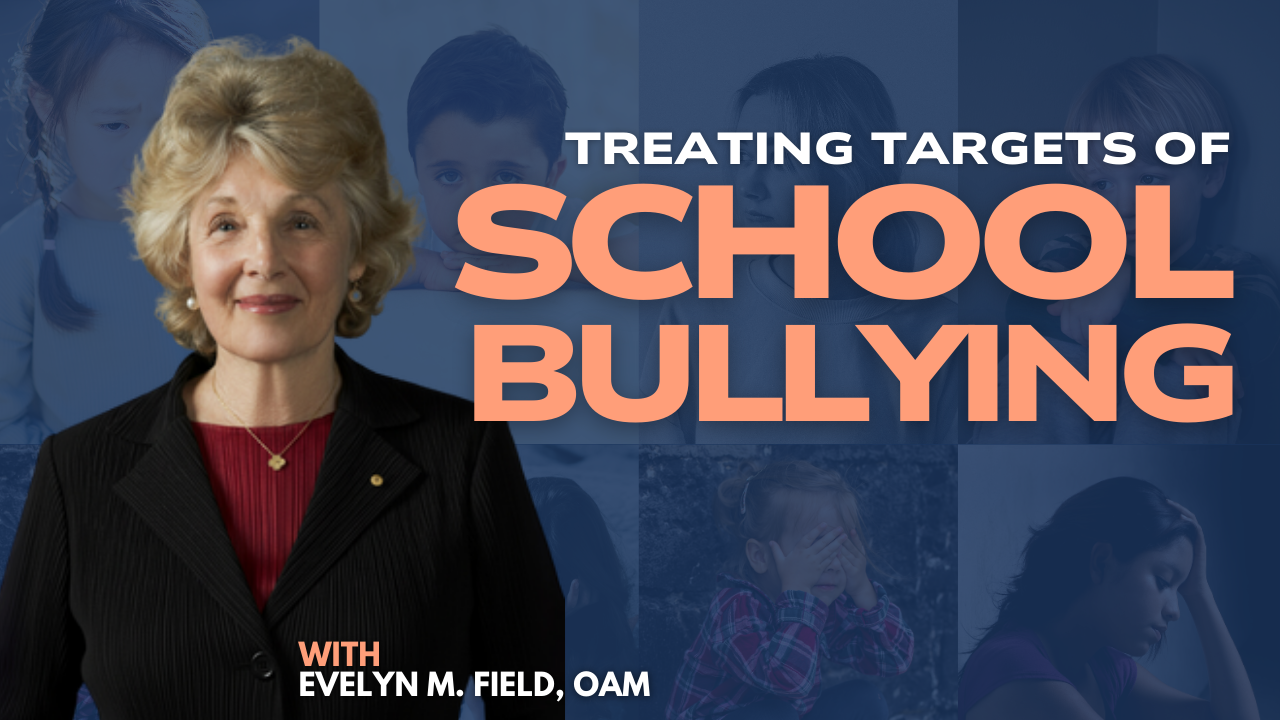
Treating targets of school bullying is a relatively new and evolving area. While school bullying is a major cause of distress for children and adolescents, it is still not recognised as a distinct diagnosis in DSM‑5‑TR. Bullying is, however, discussed in DSM‑5‑TR as a potential traumatic event in the context of PTSD when it involves a credible threat of serious harm or sexual violence. Bullying is caused by dysfunctional systems, at school or at work. It is further affected by individual personalities. Thus, treatment issues may be complex.
Bullying causes many individual injuries, including depression, anxiety disorders, panic attacks, post-traumatic stress disorder, physical symptoms, social difficulties and can change personality. It can cause epigenetic changes. Thus, the treating psychologist and school counsellor or any other such a professional, needs to be knowledgeable and skilled in many different areas, understand bullying and be able to provide short and long-term therapy and use a range of treatment methods, depending on their clients’ needs. Treatment is quick and takes around four – six sessions on average.
There is no evidence that telling the child, “walk away, do nothing, tell them to stop’” will work. When targets of school bullying become angry, scared or upset they make a bully happy. The core to treatment is teaching children how not to react when bullied, but to remain cool, focused and respond neutrally. They will immediately notice the bully’s embarrassment and their need to stop. Then other children are more likely to respect the target. Thus, managing bullies is a prerequisite for effective social skills.
Join Evelyn Field, psychologist, presenter, author and a national expert on the topic of bullying, and learn how to treat targets of bullying effectively and effortlessly. She will teach you how to:
- help targets deal with their distress and powerlessness,
- block bullies effectively and learn these skills for life,
- train targets and help them build their social survival skills, and avoid being ostracised, learning how to become a nice, friendly, caring person and join a social group.
CPD Information For Mental Health Professionals
Enjoy complete flexibility with 100% self-paced learning you can access anytime, anywhere, and on any device. Pay once for lifetime access.
Course Duration: 2 learning hours
Certificate and CPD hours: On completion you’ll receive a Certificate of Completion to support your CPD records.
Assessment: Complete a short quiz at the end (80% pass mark), which you can resit as many times as needed.
Lifetime Access: Your access to the course does not expire, so you can revisit key concepts anytime you want a refresher for practice.
CPD Eligibility: This program may be suitable for CPD for professionals such as:
- Psychologists
- Counsellors and Psychotherapists
- Social Workers
- Community Workers
- Mental Health Nurses
- General Practitioners (GPs)
- Occupational Therapists
CPD requirements vary between professional bodies, so please check with your association or credentialing body to confirm you can claim CPD hours/OPD points for this program and what evidence they require.

Course Content
Meet Your Instructor

School and workplace bullying that devastates lives and careers isn't just a behavioral problem - it's a form of psychological trauma that requires specialised therapeutic expertise. Evelyn Field has spent over 45 years developing revolutionary approaches to empowering targets of bullying, becoming Australia's leading authority on what she terms "social survival skills" and earning the nation's highest honor for her anti-bullying initiatives.
As a Fellow of the Australian Psychological Society and recipient of the Order of Australia Medal (OAM), Field has transformed how we understand and treat bullying trauma through her pioneering six-step social and emotional resilience model. Her bestselling books Bully Blocking and Bully Busting have been translated into five languages, while her therapeutic approach has been presented internationally across New Zealand, Belgium, Spain, USA, Vietnam, Canada, Norway, Wales, Italy, and Israel. Her unique perspective comes from having been bullied as a student, then returning to work as a psychologist at the same school - giving her unparalleled insight into both sides of the experience.
Field's expertise spans school and workplace bullying intervention, trauma therapy, social and emotional resilience building, and what she calls "Workplace Bullying Trauma" (WBT) - a specialised form of PTSD. As Chair of the Australian Association for Workplace Bullying Professionals and former convenor of the International Association of Workplace Bullying and Harassment Therapist Special Interest Group for seven years, she has established the clinical framework for treating bullying-related trauma that is now used worldwide.
What sets her training apart is lived experience combined with clinical expertise. Field doesn't just teach anti-bullying strategies - she shows practitioners how to help victims develop genuine psychological resilience while addressing the specific trauma patterns that bullying creates. Her media work (over 900 interviews) demonstrates her ability to translate complex therapeutic concepts for both professionals and the public.
For your practice, expect to gain specific assessment tools for bullying trauma, evidence-based intervention strategies for both children and adults, and frameworks for building social survival skills that prevent future victimisation. Her approach particularly benefits clinicians working with clients who have experienced workplace harassment, school bullying, or social isolation.
Quick Win: Field's "bully-blocking formula" teaches clients to immediately recognise bullying patterns and respond with specific verbal and behavioral strategies - in cases stopping harassment within days and building confidence that lasts.
Qualifications
- Postgraduate degrees, Psychology (Educational and Counselling), Melbourne University, RMIT University, La Trobe University
- Fellow of the Australian Psychological Society (FAPS)
- Licensed Counselling Psychologist, Australia
- 45+ years clinical experience
- 17 years as school-based psychologist
Authored Books
- Harry the Bully Blocker (2021, available as e-book, hardcopy, audiobook)
- Harry the Bully Blocker goes to school (children's book)
- Strategies for Surviving Bullying at Work (2011, Australian Academic Press)
- Bully Blocking at Work (2010, Australian Academic Press)
- Bully Blocking® (2007, Finch Publishing, bestseller, translated into Korean, Czechoslovakian)
- Bully Busting (1999, Finch Publishing, bestseller, translated into Italian, Croatian, Arabic)
Awards & Recognition
- Order of Australia Medal (OAM), Australian Government, 2014 (for school and workplace bullying initiatives)
- Fellow of the Australian Psychological Society (FAPS)
- Accredited Speaking Member, National Speakers Association of Australia (past)
Teaching & Leadership Roles
- Chair, Australian Association for Workplace Bullying Professionals (AAWBP), current
- Practising Counselling Psychologist, Private Practice, Melbourne, 1982–present
- Media Spokesperson, Australian Psychological Society, current
- Professional Advisory Board Member, National Centre Against Bullying
- Board Member, Mental Health Foundation of Victoria (20 years)
Featured & Recognition
- Media Spokesperson, Australian Psychological Society (over 900 interviews in 45 years)
- Regular appearances on Australian radio, television, and print media
- International media commentary on bullying topics
- Podcast appearances including workplace bullying specialist topics
Speaking & Training
- International presentations: New Zealand, Belgium, Spain, USA, Vietnam, Canada, Norway, Copenhagen, Wales, Italy, Israel
- Workshops: Australian Psychological Society (20+ years), British Psychological Society (2017), Vietnam First Southeast Asia Regional Conference of Psychology (2017), Israel Psychological Association (2018)
- Conference presentations for over 40 years
Ready to help bullying targets develop genuine resilience and recovery? Discover how Evelyn Field's evidence-based social survival skills can transform victims into empowered individuals who attract healthy relationships and block future harassment.
Feedback & Reviews
This course includes:
- Lessons 4
- Topics 0
- Duration 2 hours
- Quizzes 1
- Language English