

Effective Steps to Protect Yourself From Narcissistic Abuse

Members
Already a Tatra member?
Log in to start this course, pick up where you left off, or save it to your favourites for later.
Not a member yet?
This course is included in Tatra membership
- Try it free for 7 days
- Learn from our entire 150+ course library for what one course costs.
- Watch on desktop, TV or mobile, whenever it suits you
- New courses added regularly
- CPD certificate when you complete each course
Most of what a clinician can offer a client leaving an abusive relationship is therapeutic. Ross Rosenberg’s list of twelve steps is only partly that. Find a good attorney. Avoid mediation. Demystify the banking, the investments and the bills. Un-isolate yourself. Alongside the work on boundaries and emotional regulation sits a set of instructions that are closer to logistics, and his argument is that the logistics are what determine whether the rest holds.
The course covers stage four of his ten-stage model, which he calls preparing for the narcissistic storm. The storm is his term for what follows a decision to leave: the emotional, social, financial and personal battles that begin once the other person understands what is happening. Stage four is everything a client does before that point, while they still have the advantage of time.
Under two hours, and the discipline he keeps returning to is not reacting. A client at this stage will be provoked, and the instinct to respond is the thing that costs them ground. He teaches the Observe Don’t Absorb technique, managing what he calls the induced conversation, and a three-strike boundary rule. He is also blunt about something that sounds contradictory from a therapist: boundaries do not change a pathological narcissist. What they can do, used carefully at this stage, is condition one enough to buy a client the room they need.
You’ll walk away with
- Twelve concrete steps for the preparation stage, in the order he teaches them
- The practical half most clinicians do not cover: legal representation, why he advises against mediation, and financial visibility
- Un-isolating a client, and why isolation is the condition everything else depends on
- Managing expectations about what leaving will actually involve
- Developing the ability to tell friend from foe as the situation becomes public
- The induced conversation, how to recognise one, and how to decline it
- The Observe Don’t Absorb technique applied at this specific point
- The three-strike boundary rule and how it is used in practice
- Why boundaries do not change a narcissist, and what they are still worth at this stage
- The prohibition on sex and intimacy during this stage, and what it protects
- Why not reacting is the whole skill, and what happens to a client who does
Watch the course trailer
CPD Information For Mental Health Professionals
Enjoy complete flexibility with 100% self-paced learning you can access anytime, anywhere, and on any device. This course is included with your Tatra Training membership, along with every other course in the library.
Where this sits: this is stage 4 of the Ten Stage Self-Love Recovery model, on its own. A longer course covers stages 4 and 5 together in more depth.
Course Duration: 1.75 learning hours
Certificate and CPD hours: On completion you’ll receive a Certificate of Completion to support your CPD records. Your certificates are yours to keep.
Assessment: Complete a short quiz at the end (80% pass mark), which you can resit as many times as needed.
Revisit Anytime: Come back to the course as often as you like while your membership is active, whenever you want a refresher for practice.
CPD Eligibility: This program may be suitable for CPD for professionals such as:
- Psychologists
- Counsellors and Psychotherapists
- Social Workers
- Community Workers
- Mental Health Nurses
- General Practitioners (GPs)
- Occupational Therapists
CPD requirements vary between professional bodies, so please check with your association or credentialing body to confirm you can claim CPD hours/OPD points for this program and what evidence they require.
Not a member yet?
Start Your 7 Day Free TrialCourse Content
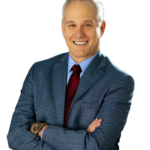
Meet Your Instructor

Individuals trapped in destructive relationships with narcissists - and the practitioners trying to help them break free from what seems like magnetic attraction to toxic partners - may need more than traditional codependency treatment to understand and heal the deeper patterns that keep them stuck. Ross Rosenberg has spent over 35 years developing groundbreaking theories about what he calls "The Human Magnet Syndrome," becoming one of the world's leading experts in narcissistic abuse recovery and the pioneer of "Self-Love Deficit Disorder™" as a revolutionary replacement for outdated codependency concepts.
As CEO/Owner of Self-Love Recovery Institute and bestselling author of The Human Magnet Syndrome (200,000+ copies sold in 12 languages, Amazon bestseller since 2013), Rosenberg brings unique expertise that combines clinical excellence with massive global reach. His 34+ million YouTube views, 310,000+ subscribers, and top 2% globally-ranked Self-Love Recovery Podcast demonstrate his exceptional ability to make complex psychological concepts accessible to millions worldwide. His latest work, The Codependency Revolution: Fixing What Was Always Broken, introduces his revolutionary Self-Love Deficit Disorder™ concept, fundamentally reshaping how we understand and treat codependent patterns.
Rosenberg's expertise spans codependency (Self-Love Deficit Disorder™), narcissistic abuse recovery, pathological narcissism, trauma treatment, gaslighting recovery, and what he describes as helping people break free from their "magnetic" attraction to partners who hurt them. His approach recognises that traditional codependency treatment often fails because it doesn't address the deeper self-love deficits that create vulnerability to narcissistic partners. He specialises in helping survivors of narcissistic abuse understand why they repeatedly choose harmful partners, develop the self-love necessary to break these patterns, and recover from the complex trauma that narcissistic relationships create.
What sets his training apart is theoretical innovation combined with authentic vulnerability. Rosenberg doesn't just teach recovery techniques - he shows practitioners and clients how to understand the unconscious "magnetic" dynamics that draw codependent individuals to narcissistic partners. His willingness to share his own recovery journey creates the authentic connection that facilitates deep healing in both professional and personal contexts.
For your practice, expect to gain specific techniques for treating narcissistic abuse trauma, tools for helping clients develop genuine self-love, and frameworks for understanding the complex dynamics that keep people trapped in toxic relationships. His approach particularly benefits practitioners working with domestic abuse survivors, those treating complex trauma presentations, or clinicians wanting to develop expertise in narcissistic abuse recovery.
Quick Win: Rosenberg's "Observe Don't Absorb" technique helps clients to create emotional boundaries with narcissistic partners - sometimes providing the first sense of personal power they've experienced in years while building the foundation for deeper recovery work.
Qualifications
- M.Ed., Counseling Psychology, Boston University, 1988
- B.A., Psychology, Towson University, Maryland, 1987
- Licensed Clinical Professional Counselor (LCPC), Illinois
- Certified Alcohol and Drug Counselor (CADC)
- Certified Sex Addiction Therapist (CSAT)
- 35+ years clinical experience (practicing since 1988)
Authored Books & Publications
- The Codependency Revolution: Fixing What Was Always Broken (2024, introduces Self-Love Deficit Disorder™ concept)
- The Human Magnet Syndrome: The Codependent Narcissist Trap (2018, Morgan James Publishing, complete rewrite)
- The Human Magnet Syndrome: Why We Love People Who Hurt Us (2013, Premier Publishing & Media, 200,000+ copies sold in 12 languages, Amazon bestseller since 2013)
- The Codependency Cure™ (treatment methodology book)
Media & Global Reach
- 34+ million YouTube views with 310,000+ subscribers
- Self-Love Recovery Podcast: Top 2% globally ranked, 245,000+ downloads
- Featured on: ABC Late Night, Fox News, WGN News, UT-San Diego News
- Regular contributor: Huffington Post, PsychCentral.com
- Featured in: Chicago Tribune, Publisher Weekly
- Hundreds of podcast guest appearances
Professional Experience & Leadership
- CEO/Owner, Self-Love Recovery Institute, Pensacola, FL, September 2013–present
- Owner, Clinical Care Consultants, Arlington Heights, IL, 2012–current
- Expert Witness, Narcissistic Abuse cases, current
- Owner, Advanced Clinical Trainers (professional training company)
Clinical Specialties
- Narcissistic abuse recovery and complex trauma treatment
- Self-Love Deficit Disorder™ (codependency) treatment
- Pathological narcissism and personality disorders
- Gaslighting recovery and psychological manipulation
- Sex and love addiction therapy
- Expert witness work in narcissistic abuse cases
Ready to help clients break free from their magnetic attraction to toxic partners and develop genuine self-love? Discover how Ross Rosenberg's revolutionary Self-Love Deficit Disorder™ methods can transform your understanding of codependency while giving you the tools to help survivors of narcissistic abuse create healthy, loving relationships for the first time.
Feedback & Reviews
This course includes:
- Lessons 2
- Topics 0
- Duration 1.75 hours
- Quizzes 0
- Language English