

Adult ADHD: Relationships & Sex, How to Treat Both Partners to Help Re-Balance the Relationship

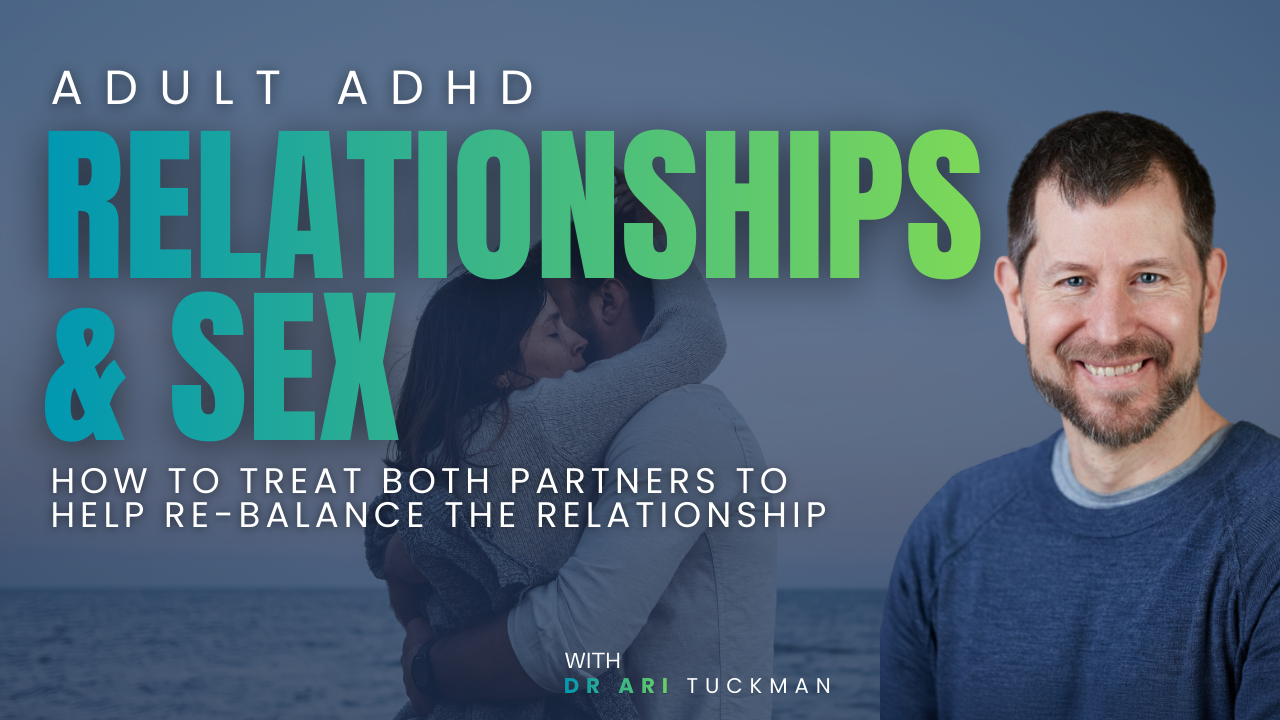
One out of eleven couples has one partner with ADHD. One partner’s ADHD can exacerbate the universal challenges that every couple needs to manage. These couples are likely to show up in your office. Unfortunately, if the one partner’s ADHD isn’t addressed directly, therapists might get stuck in the same traps as the partners do. Hence, it is important for the therapists to know how to:
- help partners negotiate different preferences and ways of doing things while still enjoying each other, and
- prevent certain relationship dynamics that are problematic.
In this course, the internationally recognised Adult ADHD expert, Dr Ari Tuckman, will share strategies to help these couples break free of the disempowering tug of war. We will learn effective strategies you will be able to use in order to assist couples in creating more balanced and satisfying relationships. There will be a special focus on rebuilding trust and hope because many of these couples are worn down when they enter therapy.
Medication is often a beneficial part of treatment, so it’s helpful for the therapists to be able to discuss what to expect and help the client make an informed decision. Whether seeing the adult with ADHD individually or as part of the couple, an important part of the work involves helping both partners better understand how ADHD impacts the individual and also the partner, and then teaching better ways of managing its day to day impact.
Dr Ari Tuckman will also discuss how ADHD impacts a couple’s sex life and their ability to have fun together. He will show you how to get couples out of the mud so they can enjoy each other again and make yet another area of discontent into a shared activity that adds energy to the relationship.
Although grounded in theory and research, this presentation is all about practical strategies and interventions. Learning how to work more effectively with these couples will benefit your work with all clients including individuals who are addressing relationship matters.
Course Content
Introduction (30 minutes)
- ADHD is an individual condition with relationship dynamics
Medication (30 minutes)
- What does it mean to take medication? And would it be good for me?
- Commonly used medications for ADHD
Individual treatment to support the couples therapy (90 minutes)
- Both partners benefit from learning more about ADHD
- Change what you can, but also accept the rest
- Your partner definitely notices when you don’t do what you should—strategies to improve productivity
- Help clients bring their best—reduce the ADHD impact on sleep habits
Couples therapy (150 minutes)
- ADHD casts a long shadow on relationships
- What to expect from each other regarding treatment
- Re-balance the relationship
- Get the partner with ADHD to step up—and also the partner without ADHD to step down
- Work better as a team of equals, not as a boss and employee
- How to create better agreements and then actually see them through
- Help partners figure out what changes to push for and which are better to accept
- Re-building trust and hope
- The inconsistency and unpredictability of ADHD undermines both partners
- How to break those repeating cycles that neither partner wants but can’t escape
- Negotiate in good faith—balance assertiveness with generosity
Sex and having fun together (45 minutes)
- Help your couples enjoy each other again—isn’t that why they’re together?
- What the research says.

CPD Information For Mental Health Professionals
Enjoy complete flexibility with 100% self-paced learning you can access anytime, anywhere, and on any device. Pay once for lifetime access.
Course Duration: 6 learning hours
Certificate and CPD hours: On completion you’ll receive a Certificate of Completion to support your CPD records.
Assessment: Complete a short quiz at the end (80% pass mark), which you can resit as many times as needed.
Lifetime Access: Your access to the course does not expire, so you can revisit key concepts anytime you want a refresher for practice.
CPD Eligibility: This program may be suitable for CPD for professionals such as:
- Psychologists
- Counsellors and Psychotherapists
- Social Workers
- Community Workers
- Mental Health Nurses
- General Practitioners (GPs)
- Occupational Therapists
CPD requirements vary between professional bodies, so please check with your association or credentialing body to confirm you can claim CPD hours/OPD points for this program and what evidence they require.
Course Content
Meet Your Instructor

When your adult clients with ADHD struggle to follow through on treatment plans, or when ADHD strains a couple's intimacy and communication, you need strategies that work in real-world practice. Ari Tuckman, PsyD, MBA has spent more than 25 years translating ADHD science into practical tools that help clinicians support adults, couples, and families navigating attention challenges, executive function gaps, and relationship friction.
A frequent presenter, Dr. Tuckman's teaching emphasises psychoeducation and skill-building that clinicians can apply immediately. He has delivered more than 850 presentations and podcast interviews for professionals and the public across the United States and internationally in Sweden, Turkey, Greece, Mexico, England, Spain, Denmark, Canada, and Iceland.
Dr. Tuckman is the author of five books on ADHD, including ADHD After Dark (2019) and The ADHD Productivity Manual (2025), and was inducted into the CHADD Hall of Fame in 2023 for his significant contributions to the field. He has served as conference committee co-chair for CHADD's annual International Conference on ADHD, the largest ADHD conference in the US. His work has reached audiences on CNN and National Public Radio and has been cited in The New York Times, USA Today, The Washington Post, and The Boston Globe. He contributes regularly to ADDitude Magazine and Attention Magazine, keeping the ADHD clinical community informed on emerging research and practical innovations.
In his West Chester, Pennsylvania, private practice, Dr. Tuckman works with teens and adults living with ADHD, as well as couples and families affected by attention and executive function challenges. His clinical focus spans ADHD diagnosis and treatment, executive function coaching, couples therapy, and sex therapy — including how ADHD shapes intimacy, desire, and relationship dynamics. His approach is grounded in helping clients understand their brains first, then build systems that match how ADHD brains actually work, rather than fighting against them.
Whether you're refining your assessment protocols, coaching clients on productivity, or helping couples navigate ADHD-related conflict, Dr. Tuckman's frameworks offer clear, evidence-informed steps you can teach and adapt.
For clinicians, his courses and materials provide concrete intervention strategies, language for psychoeducation, and tools to address the executive function deficits that undermine treatment gains. You'll learn how to support clients in managing time, organising tasks, sustaining attention, and regulating emotions — and how to help couples repair trust and intimacy when one or both partners have ADHD.
Qualifications
- Doctor of Psychology (PsyD)
- Master of Business Administration (MBA)
- Licensed psychologist in private practice
Selected Books
- The ADHD Productivity Manual (2025)
- ADHD After Dark: Better Sex Life, Better Relationship (2019)
- Understand Your Brain, Get More Done: The ADHD Executive Functions Workbook (2012)
- More Attention, Less Deficit: Success Strategies for Adults with ADHD (2009)
- Integrative Treatment for Adult ADHD: A Practical, Easy-to-Use Guide for Clinicians (2007)
Teaching & Roles
- Conference committee co-chair, CHADD International Conference on ADHD
- Former board member, CHADD
- Former vice president, Attention Deficit Disorder Association (ADDA)
- Frequent international speaker (850+ presentations and podcast interviews across nine countries)
- Faculty, Coach Approach Training Institute
Feedback & Reviews
This course includes:
- Lessons 4
- Topics 0
- Duration 6 hours
- Quizzes 6
- Language English