

Autism Treatment From a Trauma Perspective

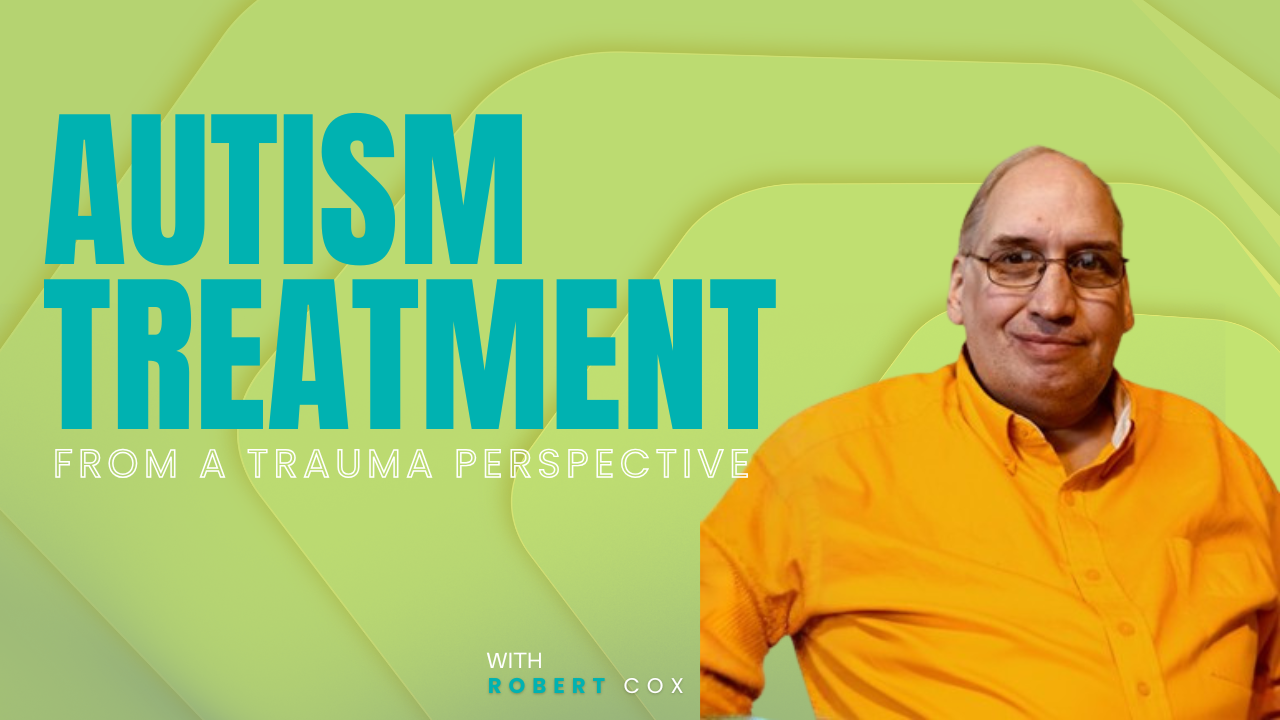
• Dive deep into autism, its diagnosis and treatment.
• Master assessment, treatment modalities and methods for improving outcomes.
• Learn why children go into meltdown mode for seemingly no reason in seconds.
• Learn how to slow that reactive process.
• Help the individual to feel safe in a constantly assaultive and traumatic world.
The latest research on autism and the brain is indicating that it affects the brain in much the same way as complex trauma. What does this mean for the delivery of behavioural and social services? If the brain is affected in the same ways as trauma what does this mean for educational, vocational, and developmental goals in the individual’s life? How do we progress with treatment based on the research of the last six years?
In this new exciting online course based on his book The Life Recovery Method: Autism Treatment From A Trauma Perspective, Robert Cox looks at the research, how the brain reacts to both trauma and autism and what this means in the real world for treatment. Using case examples and his own observations, he has laid out a method and direction for treatment that is making a profound difference in the lives of the individuals affected by autism.
Many individuals with autism have experienced a trauma that re-emerges in episodes of self-harm, depression, harm to others, and isolation. Robert Cox encourages some treatment modalities, including Mindfulness Training and Play Therapy, to allow the individuals with autism to move their thoughts past the trauma. He encourages them to focus on what their life can become. He’s been very successful with his clients who are now able to make eye contact with others and speak for themselves, or work alongside others in competitive jobs. Many have become independent and have left their homes and are now living with supports in their community. Their caregivers have been given effective tools and hope.
From families to schools to employment and individual struggles, Robert Cox shares the methods that can bring lasting change to lives and often reduce or remove the necessity for expensive and time-consuming behavioural services.
This course will provide a clear direction for the implementation of services that will make all the difference in the lives of those struggling with life on the autism spectrum. Simple and highly effective treatment ideas will be presented. By the end of this course, you will be inspired and will have a deep sense of hope, purpose and confidence.
Learning Objectives
This training will provide participants clinical knowledge and tools to:
- Assess the level of ASD in individuals.
- Assess sensory needs and begin developing a cursory sensory diet.
- Assess areas of Executive Functioning that may be affected.
- Describe how Autism acts as a trauma on the brain and impact this has on individuals.
- Use methods to begin helping individuals to improve brain function.
- Assist individuals in increasing socialization and communication skills.
Target Audience:
Mental Health Clinicians & Therapists, Social Workers, Psychologists, Marriage & Family Therapists, Counselors, School Personnel, Youth Development Workers; Healthcare Workers.
CPD Information For Mental Health Professionals
Enjoy complete flexibility with 100% self-paced learning you can access anytime, anywhere, and on any device. Pay once for lifetime access.
Course Duration: 4.5 learning hours
Certificate and CPD hours: On completion you’ll receive a Certificate of Completion to support your CPD records.
Assessment: Complete a short quiz at the end (80% pass mark), which you can resit as many times as needed.
Lifetime Access: Your access to the course does not expire, so you can revisit key concepts anytime you want a refresher for practice.
CPD Eligibility: This program may be suitable for CPD for professionals such as:
- Psychologists
- Counsellors and Psychotherapists
- Social Workers
- Community Workers
- Mental Health Nurses
- General Practitioners (GPs)
- Occupational Therapists
CPD requirements vary between professional bodies, so please check with your association or credentialing body to confirm you can claim CPD hours/OPD points for this program and what evidence they require.

Course Content
Meet Your Instructor

Individuals with autism spectrum disorders struggling with undiagnosed trauma - and practitioners working with clients whose behaviors don't respond to traditional approaches - can miss the critical connection between developmental differences and traumatic stress. Robert Cox has spent over 20 years pioneering this intersection, becoming one of the few experts who understands how autism and trauma interweave to create complex presentations that require specialised treatment approaches informed by lived experience with recovery.
As Owner/Therapist at Life Recovery Consulting and Executive Director of The Tristn Jevon Center for Recovery, Cox brings unique expertise grounded in both professional training and 33+ years of personal recovery from addiction (clean since 1988). His book The Life Recovery Method: Treating Autism From a Trauma Perspective represents groundbreaking work in understanding how developmental differences affect trauma processing and recovery. His role as President-Elect of the American Counseling Association of Missouri and presentations at Autism Society national conferences demonstrate his leadership in advancing trauma-informed autism treatment approaches.
Cox's expertise spans trauma treatment from an autism perspective, addiction counseling, complex trauma and PTSD, mindfulness-based interventions, dissociative disorders, and what he calls helping clients "live vulnerably in an uncertain world with real joy, connection and courage." His approach recognises that many individuals with autism spectrum disorders have experienced significant trauma related to their developmental differences - from bullying and social rejection to medical trauma and sensory overwhelm - but traditional trauma treatments may fail if they don't account for autistic processing differences. He specialises in cases where standard approaches haven't worked, particularly with clients who have dual diagnoses of autism and addiction, or trauma presentations complicated by sensory processing differences.
What sets his training apart is lived experience combined with clinical expertise. Cox doesn't just teach theoretical approaches - he shows practitioners how his own journey through addiction, trauma, and recovery informs his understanding of resilience and healing. His 30 years of mindfulness practice and specialisation in DBT mindfulness techniques give him deep insight into helping clients develop distress tolerance skills that work for neurodiverse populations.
For your practice, expect to gain specific techniques for treating trauma in autistic individuals, tools for adapting traditional trauma therapies for neurodiverse clients, and frameworks for understanding how developmental differences affect addiction and recovery processes. His approach particularly benefits clinicians working with autistic clients, those treating dual diagnosis presentations, or practitioners wanting to develop trauma-informed approaches for neurodiverse populations.
Quick Win: Cox's "sensory-informed grounding" technique helps autistic clients access present-moment awareness during trauma responses - sometimes providing the first effective self-regulation tool they've ever had while honoring their unique sensory processing needs.
Qualifications
- MA, Counseling, MidAmerica Nazarene University, 2015
- BA, Social Psychology, Park University, 2011
- Licensed Professional Counselor (LPC), Missouri
- National Certified Counselor (NCC)
- Provisional Licensed Professional Counselor (PLPC)
- 20+ years experience in mental health field
- 33+ years personal recovery experience (clean since 1988)
- 30 years mindfulness practice, specialised in DBT mindfulness techniques
Authored Publications
- The Life Recovery Method: Treating Autism From a Trauma Perspective (2016)
Leadership & Professional Service
- Owner/Therapist, Life Recovery Consulting, Richmond, MO & Liberty, MO
- Executive Director, The Tristn Jevon Center for Recovery, Richmond, MO
- Adjunct Professor, MidAmerica Nazarene University, Graduate Counseling Program
- President-Elect, American Counseling Association of Missouri, current
Professional Experience
- Opened trauma treatment center in Richmond, MO, December 2017
- Various capacities in mental health field for 20+ years
- Volunteer, Kairos Prison Ministry, Crossroads Correctional Center, Cameron, MO
- 20+ years working specifically with autism spectrum individuals
- Podcast Host, "Mindful Recovery," 2016–2018 (37 episodes)
- International speaker on trauma and addiction
Clinical Specialties
- Trauma treatment for autism spectrum disorders
- Addiction counseling for neurodiverse populations
- Complex trauma and PTSD in autistic individuals
- Mindfulness-based interventions adapted for autism
- Dissociative disorders and attachment issues
- Dual diagnosis treatment (autism and addiction)
- Sensory processing trauma and medical trauma
- Rural community mental health services
Ready to develop expertise in the overlooked intersection of autism and trauma? Discover how Robert Cox's Life Recovery Method can transform your understanding of how developmental differences affect trauma processing and give you the specialised tools needed to help neurodiverse clients achieve genuine healing and recovery.
Feedback & Reviews
This course includes:
- Lessons 5
- Topics 0
- Duration 4.5 hours
- Quizzes 1
- Language English