

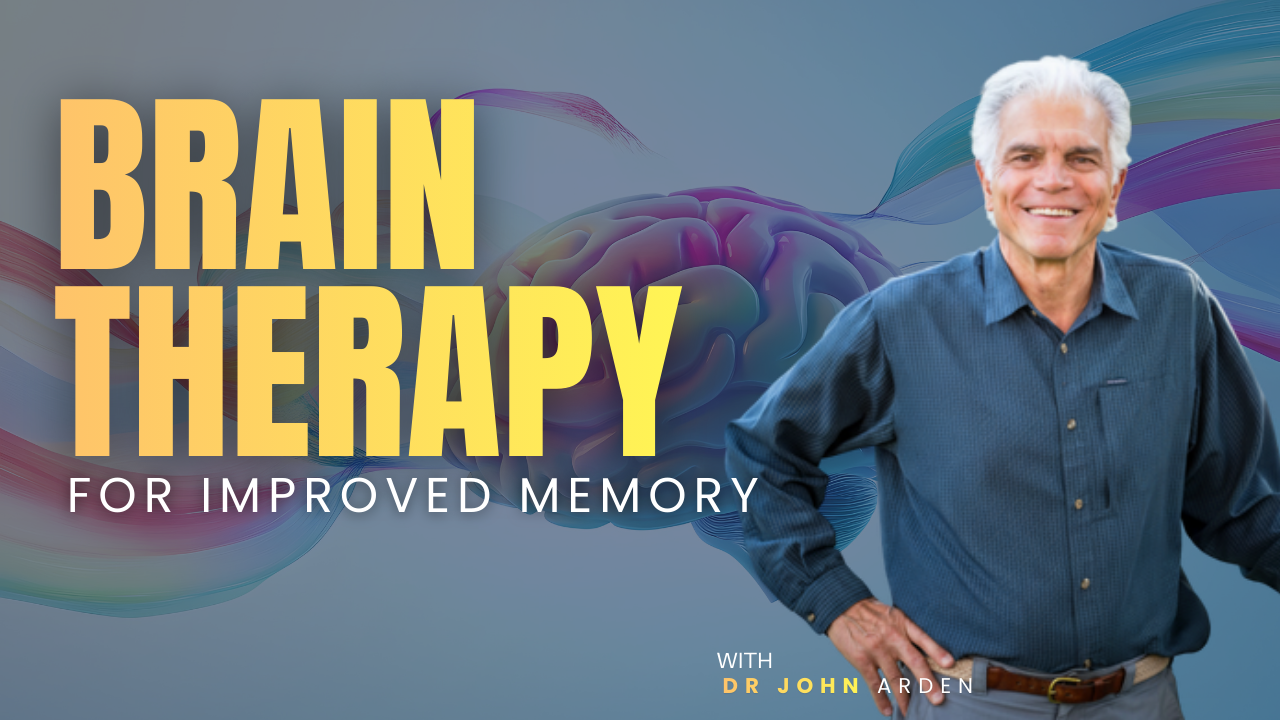
Brain Therapy for Improved Memory

A client in their fifties tells you they are worried about their memory. They lose their keys. They walk into a room and cannot think why they went in. They blank on the name of someone they have known for years, and they have started reading about early dementia at two in the morning. Almost nothing they have described is a memory problem.
John Arden’s correction is that memory is not one thing. It is several systems working together, and the lapses people panic about sit almost entirely in working memory, which is a question of attention. That distinction changes what you do about it. It also matters because a client convinced they are losing their mind carries an anxiety that makes encoding worse, so the belief compounds the problem it is worried about.
There is a second argument running underneath, and it is the one that makes this course relevant to clinicians who do not work with older adults at all. Every time a memory is retrieved it is re-encoded, coloured by the mood and the circumstances it is retrieved in. Which means that bringing up a memory in a session, in the presence of a different emotional state, is memory work whether you name it that or not. Arden puts it plainly: we are memory manipulators. Over four hours he covers the memory systems and how they encode, what films and courtrooms have got badly wrong about amnesia and eyewitness accounts, the habits and substances that drain memory, and then the techniques themselves.
You’ll walk away with
- A way to separate an ordinary memory lapse from something worth investigating, and language for the client who has already diagnosed themselves online
- The distinction between working memory and long-term memory, and why nearly every complaint you hear sits in the first one
- The re-encoding argument, and what it says about what you are already doing every time a client recounts something in session
- A grounded view of how unreliable recall is, including eyewitness identification, useful whenever a client’s account of an event is being treated as fixed
- The arousal curve that governs encoding, and why a client who is slightly uncomfortable takes more away from a session than one who is completely at ease
- The habits, substances and medications that drain memory, including several clients would never think to mention
- The loci method, taught well enough that you can walk a client through it rather than describe it
- Chunking, tagging and serialising, for the information a client actually needs to hold on to
- A method for remembering names, which is the memory complaint clinicians raise about themselves more than any other
- The difference between implicit and explicit memory, and why some presentations are the two systems failing to work together rather than a deficit in either
Watch the course trailer
CPD Information For Mental Health Professionals
Enjoy complete flexibility with 100% self-paced learning you can access anytime, anywhere, and on any device. This course is included with your Tatra Training membership, along with every other course in the library.
Course Duration: 4 learning hours
Certificate and CPD hours: On completion you’ll receive a Certificate of Completion to support your CPD records. Your certificates are yours to keep.
Assessment: Complete a short quiz at the end (80% pass mark), which you can resit as many times as needed.
Revisit Anytime: Come back to the course as often as you like while your membership is active, whenever you want a refresher for practice.
CPD Eligibility: This program may be suitable for CPD for professionals such as:
- Psychologists
- Counsellors and Psychotherapists
- Social Workers
- Community Workers
- Mental Health Nurses
- General Practitioners (GPs)
- Occupational Therapists
CPD requirements vary between professional bodies, so please check with your association or credentialing body to confirm you can claim CPD hours/OPD points for this program and what evidence they require.
Course Content
Meet Your Instructor
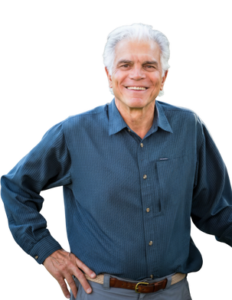
Practitioners seeking to deepen their understanding of why therapeutic interventions create lasting change - and those curious about the neurobiological mechanisms underlying successful therapy - can enhance their clinical effectiveness by integrating neuroscience with established therapeutic approaches. John Arden has spent over 40 years pioneering the integration of neuroscience and psychotherapy, becoming one of the world's leading authorities on an integrative approach and helping thousands of practitioners understand how to leverage neuroplasticity and neurogenesis for more effective treatment outcomes.
As former Northern California Regional Director of Training at Kaiser Permanente for 25 years, where he developed one of the largest mental health training programs in the United States overseeing 150+ interns and postdoctoral residents, Dr. Arden brings unparalleled expertise in training mental health professionals. His 16 books translated into 20 languages - including Mind-Brain-Gene: Toward Psychotherapy Integration, Rewire Your Brain 2.0, and Brain-Based Therapy with Adults - represent the definitive resources for understanding how neuroscience transforms clinical practice. His Choice Outstanding Academic Book Award and recognition as one of the most entertaining and integrative speakers in professional psychology reflect his unique ability to make complex concepts immediately applicable.
Dr. Arden's expertise spans integration, neuroplasticity and neurogenesis applications, metabolic, psychoneuroimmunology, epigenetics, mindfulness-based interventions, and nutritional neuroscience. His approach synthesises evidence-based practice with cutting-edge neuroscience research, showing clinicians how psychotherapy literally rewires the brain. He specialises in anxiety disorders, OCD, PTSD, depression, and memory improvement, with particular focus on how therapeutic relationships activate neuroplastic change and how lifestyle factors influence brain health and therapeutic outcomes.
What sets his training apart is scientific rigor combined with practical application. Arden doesn't just teach neuroscience theory - he shows practitioners exactly how body-brain systems influence therapeutic success and failure. His seminars in all 50 U.S. states and over 30 countries demonstrate his exceptional ability to translate complex neuroscience into immediately usable clinical strategies that enhance existing therapeutic modalities.
For your practice, expect to gain specific integrative interventions that enhance treatment outcomes, tools for educating clients about their neurological processes, and frameworks for integrating neuroscience principles with your current therapeutic approach. His methods particularly benefit clinicians wanting to understand why their interventions work, those seeking to enhance treatment efficacy, or practitioners interested in cutting-edge therapeutic applications.
Quick Win: Arden's "SEEDS" formula (Social connection, Exercise, Education, Diet, Sleep) provides clients with five evidence-based lifestyle interventions that promote neuroplasticity - often creating measurable improvements in mood and cognitive function while supporting therapeutic progress.
Qualifications
- Ph.D., Psychology, University of New Mexico, 1980–1984
- Post-License Training, Neuropsychology, California School of Professional Psychology, 1987–1988
- M.A., Counseling Psychology, Northern Arizona University, 1975–1976
- B.S., Social Sciences, Northern Arizona University, 1969–1973
- Over 40 years experience in psychology
Authored Books (16 total, translated into 20 languages)
- Mind-Brain-Gene: Toward Psychotherapy Integration (2019)
- Rewire Your Brain 2.0 (updated edition)
- Brain2Brain (2015, practical neuroscience for psychotherapy)
- The Brain Bible (comprehensive guide to brain-based approaches)
- Brain-Based Therapy: Adults (co-author with Lloyd Linford)
- Brain-Based Therapy: Children & Adolescents (co-author with Lloyd Linford)
- Conquering Post Traumatic Stress Disorder (co-author with Victoria Beckner)
- The Brain-Based Anxiety Workbook, The Brain-Based OCD Workbook
- Improving Your Memory for Dummies
Professional Experience
- Author 1996–present
- International Trainer & Speaker, Integrative Approaches, 2009–present
- Northern California Regional Director of Training, Kaiser Permanente, 1999–2016 (26+ years)
- Chief Psychologist, Kaiser Permanente (prior to 1999)
- Supervisor, Mental Health Practitioners, Kaiser Permanente
- Seminars conducted in all 50 U.S. states and 30 countries worldwide
Clinical Specialties
- Integration of neuroscience and evidence-based psychotherapy
- Neuroplasticity and neurogenesis applications in treatment
- Psychoneuroimmunology and epigenetic factors in therapy
- Brain-based approaches to anxiety, OCD, PTSD, and depression
- Memory improvement and cognitive enhancement
- Mindfulness and nutritional neuroscience
- Lifestyle interventions for brain health
Ready to revolutionise your therapeutic effectiveness through neuroscience? Discover how Dr. Arden's integrative approach can help you understand exactly why your interventions work and how to leverage neuroplasticity for faster, more lasting client change.
Feedback & Reviews
This course includes:
- Lessons 5
- Topics 0
- Duration 4 hours
- Quizzes 1
- Language English